DSC05428

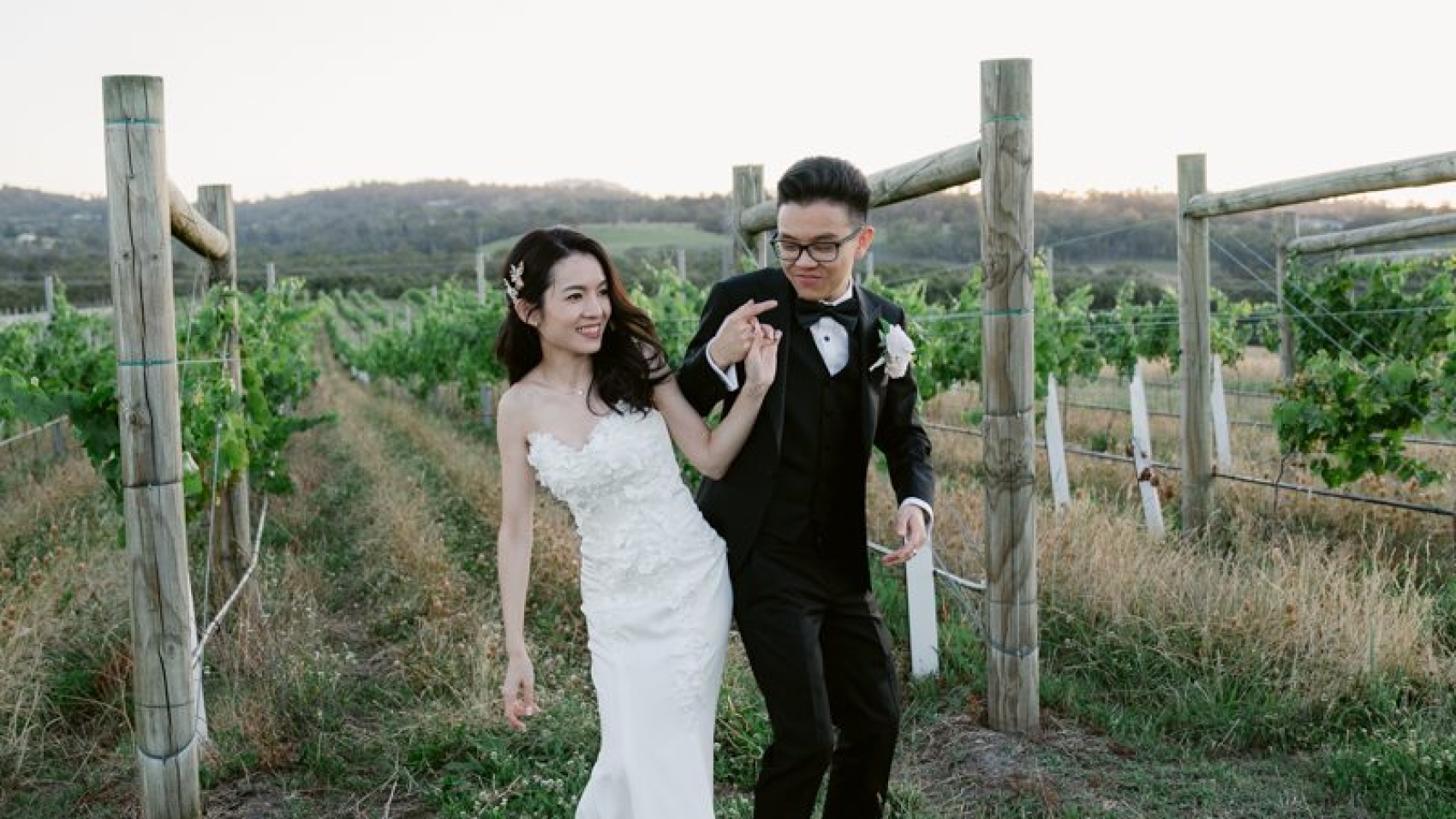
Melbourne wedding photography with a Japanese-style fresh and soothing style

Japanese-Inspired Fresh and Healing Wedding Photography in Melbourne

There is a gentleness to Japanese photography that most Western styles simply do not touch. It is not about grand gestures or dramatic lighting or sweeping landscapes. It is about the small things — the way light falls on a hand, the pause between two people who just shared a laugh, the quiet moment before a kiss that lasts longer than the kiss itself. This aesthetic, often called “healing” or “soft life” photography, finds its perfect home in Melbourne. The city has pockets of green and water and pale light that feel unexpectedly Japanese, and couples who want their wedding album to feel like a warm breath on a cool morning gravitate here without even realizing why.
wedding photography melbourne

What Makes This Style Feel So Different

Japanese wedding photography is not a technical choice — it is an emotional one. Western wedding photography tends to celebrate the event: the dress, the venue, the party. Japanese-inspired work celebrates the relationship. It slows down. It notices the quiet parts. A bride adjusting her groom’s collar. A couple sitting on a bench with their shoes off. The way a veil catches wind and they both look up at the same time. These are not “hero shots” in the traditional sense, but they are the images people cry over twenty years later.

The visual language is specific. High-key lighting — bright, airy, slightly overexposed. Soft focus on the edges. Muted greens, pale blues, warm whites, and touches of blush. Everything feels washed in morning light, even when the sun is high. The grain is fine, almost invisible, and the colors lean toward desaturated warmth — think of a Studio Ghibli background, soft and detailed but never harsh.

Melbourne delivers this mood almost by accident. The city’s light, filtered through clouds and bounced off pale sandstone, naturally produces that soft, diffused quality that Japanese photographers spend careers chasing. You do not need to force it here — you just need to show up and let the city do what it already does.

Gardens and Green Spaces That Feel Like Kyoto

You do not need a plane ticket to Japan. Melbourne has several spots that channel that same serene, garden-like energy with surprising authenticity.

The Japanese Garden in the Royal Botanic Gardens

This one is almost too obvious, but it works — and it works beautifully. The Australian-Japanese Garden near the lake in the Royal Botanic Gardens has a curved bridge, a koi pond, maple trees, and carefully raked gravel that screams Japanese aesthetics. The problem most couples face is that it gets crowded on weekends. The fix is simple: go at sunrise on a weekday. The garden is empty, the mist sits low over the water, and the light is pale and golden at the same time. A couple standing on the bridge, soft and slightly out of focus, with the pond reflecting pale sky — it looks like a photograph from a Japanese lifestyle magazine.

The surrounding Botanic Gardens also offer quieter pockets. The cranbourne lawns and the Oriental-themed sections near the Guilfoyle’s Volcano have wide open green spaces with scattered trees that feel meditative. Walking barefoot through dew-wet grass in a simple white dress produces images that are so gentle they almost hum.

Dandenong Ranges and Ferny Creek

Further out, the Dandenong Ranges deliver a different kind of Japanese feel — more forest, more moss, more rain. The Sherbrooke Forest walk is the standout. Towering tree ferns, moss-covered logs, and a canopy so thick that the light comes through in soft shafts. It looks like the forest from a Miyazaki film — lush, green, and alive. The humidity keeps everything dewy, which means leaves glisten and skin looks fresh and natural without any retouching.

Ferny Creek walking track near Belgrave is another gem. The creek bed is lined with myrtle beeches and the water is shallow and clear. In autumn the fallen leaves turn gold and red, and the whole scene looks like a watercolor painting left out in the rain. Couples wading barefoot through the creek, laughing, caught mid-movement — these frames have that candid, unposed quality that defines the Japanese healing aesthetic.

Urban Spots With a Quiet, Airy Energy

Japanese photography is not only about nature. Some of the most beautiful images in this style come from city streets that happen to be pale and quiet.

Fitzroy and Collingwood’s Tree-Lined Streets

Brunswick Street in Fitzroy has a particular quality in the early morning. The old Victorian terraces, the jacaranda trees (in spring) or plane trees (year-round), and the pale footpaths create a soft, almost pastel palette. The street is empty before 8am. A couple walking slowly, holding hands, shot from a distance with a long lens that compresses the background into a wash of green and cream — it looks like a frame from a quiet Japanese drama.

Wellington Parade in Collingwood offers similar energy but with more industrial texture. The old factories and warehouses along the parade have pale brick walls and large windows that let in soft, even light. Standing in front of one of these windows, backlit, with nothing but a white wall and soft shadow behind you — that minimalism is pure Japanese. Less is more. Empty space is not empty; it is full of feeling.

Melbourne’s Coastal Paths and Piers

The coast gives this style a different dimension — open, airy, and slightly melancholic in the best way. The St Kilda Baths and the palais pier at dawn have a pale, washed-out quality that looks almost monochrome. The concrete structures, the flat water, the pale sky — everything is muted and soft. A couple sitting on the edge of the pier, legs dangling, facing the water, shot in high-key — the image feels like it belongs in a Japanese indie film about young love.

Brighton Beach and the Elwood foreshore offer a similar vibe but more intimate. The bathing boxes, the calm water, the wide sandy beach — all of it photographs in soft pastels when the light is right. Early morning here, when the tide is low and the sand is wet and reflective, creates a mirror effect that doubles the softness. Walking along the waterline, wind in hair, simple linen clothes — this is the visual equivalent of a deep breath.

The Emotional Core: Capturing What Cannot Be Staged

The Japanese healing style is not really about locations or light or even editing. It is about attention. It asks the photographer to pay attention to the things that happen between the planned moments — the in-between breaths, the glances that last half a second too long, the way a hand finds another hand without looking.

The Power of Negative Space

Japanese composition loves empty space. A couple positioned in the bottom third of the frame, with a vast pale sky or a blank wall above them, creates a sense of openness and calm that crowded compositions cannot. Melbourne’s architecture helps here — the wide verandas of Victorian homes, the blank concrete walls of laneways, the open sky above the Yarra — all of it provides natural negative space that makes the couple feel both intimate and free.

Do not fill the frame. Let the image breathe. A small couple against a large, empty background reads as tender and vulnerable — exactly the feeling this style is after.

Candid Moments Over Posed Ones

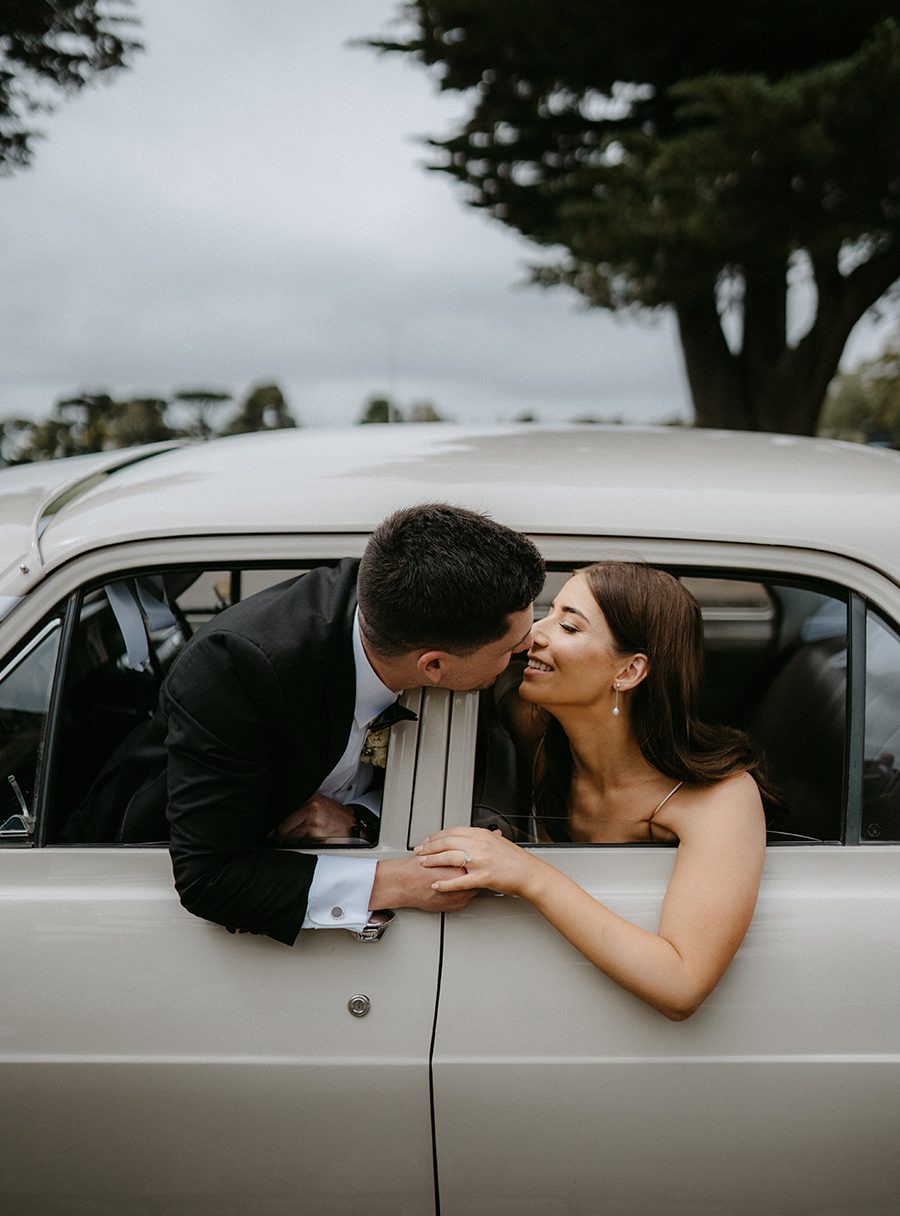
The most healing images are never posed. They happen when the couple forgets the camera is there. Laughing in a car. Eating chips on a park bench. Dancing badly in a kitchen. These unguarded moments carry more emotional weight than any perfect portrait, and they photograph beautifully in this style because the softness of the light and the muted palette make even messy, chaotic moments look gentle.

A good photographer working in this style spends the first hour just walking and talking with the couple — no camera, no direction. By the time the camera comes out, the couple is relaxed and natural, and the images that follow feel like they were stolen rather than taken.

Editing That Feels Like a Soft Memory

The post-processing for this style is subtle but deliberate. The goal is not to make the photo look Japanese — it is to make it feel like a memory of a perfect day. Lift the shadows slightly so nothing is truly dark. Desaturate the greens so they lean toward sage or olive. Warm the highlights just a touch — not gold, not orange, just a whisper of warmth. Add the finest grain possible, just enough to kill the digital sharpness and give the image a tactile, film-like quality.

Skin tones should be pale and even, never tanned or contrasty. The whites should be creamy, not blown out. The blacks should be lifted to dark grey, never true black — true black feels heavy and Western; dark grey feels soft and Eastern.

The overall effect should be an image that makes you exhale when you see it. Not because it is boring — but because it is calm. And in a world that is loud and fast and overstimulated, a calm wedding photograph is the rarest luxury of all.

Melbourne gives you the gardens, the coast, the laneways, the light, and the quiet mornings. All you need is a photographer who understands that the most important thing in any frame is not what you see — it is what you feel when you look away.
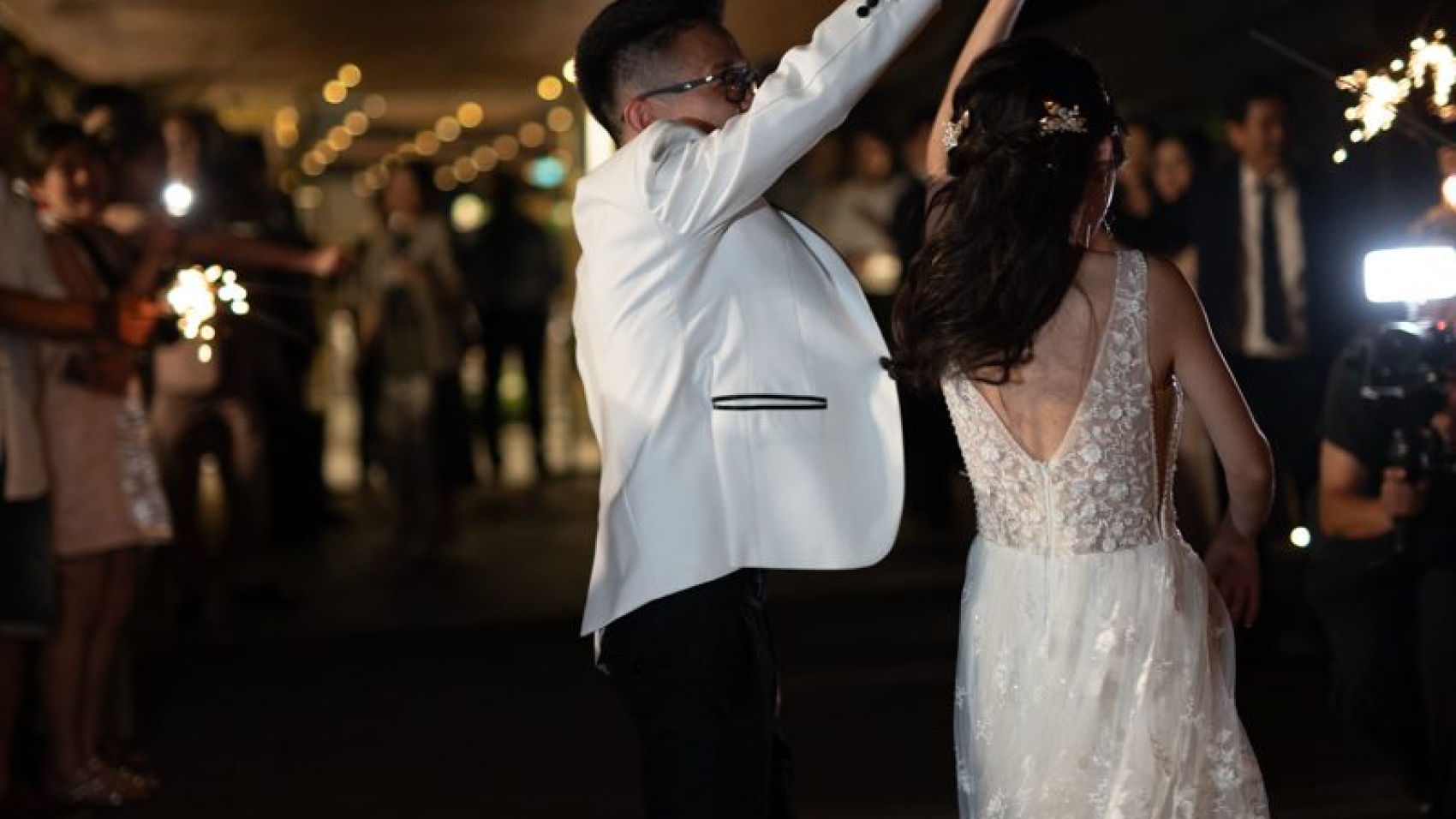
DSC05431

Melbourne wedding photography featuring a light, luxurious, simple and grand style

Affordable Luxury Wedding Photography in Melbourne: Minimalist Elegance That Feels Expensive

There is a particular kind of wedding photography that whispers instead of shouts. It does not rely on elaborate sets or oversized floral arches or a dozen assistants running around with reflectors. It trusts negative space, natural textures, and the quiet power of two people standing still in a beautiful room. This is the affordable luxury aesthetic — the look that says “we spent a fortune” without actually costing a fortune. Melbourne, with its abundance of understated architectural gems and its love of clean design, is practically built for this style.

wedding photography melbourne

What Affordable Luxury Actually Means in Photography

Forget the word “cheap.” Affordable luxury is not about cutting corners — it is about choosing wisely. It means directing every dollar toward the things that matter most: light, location, and the photographer’s eye. It means skipping the five-tier cake backdrop and instead standing in front of a single marble column. It means one perfect bouquet instead of twelve arrangements. It means letting the venue do the talking so you do not have to.

In Melbourne, this approach works especially well because the city already looks expensive. The sandstone facades, the iron lace balconies, the polished concrete floors of converted warehouses — none of it needs dressing up. You just show up, dress well, and let the camera do its job. The result is imagery that looks like it belongs in a high-end editorial spread, not a budget-conscious wedding blog.

The key principle is restraint. Every element in the frame earns its place. If it does not add to the mood, it gets removed. Clutter is the enemy. Noise is the enemy. Anything that competes with the couple for attention gets stripped away. What remains is clean, calm, and quietly devastating.

Melbourne Locations That Scream Quiet Money

You do not need a private estate or a penthouse suite to get this look. Melbourne is full of public and semi-public spaces that radiate understated elegance for free or near-free.

The National Gallery of Victoria and Its Surrounds

The NGV itself is off-limits for wedding photography inside, but the exterior and the surrounding gardens are another story entirely. The Great Hall’s sandstone facade, the water wall with its gentle cascade, and the surrounding lawns create a backdrop that feels institutional and grand without being cold. The trick is to shoot against the stone — the warm honey tones of the sandstone paired with a simple white dress and a linen suit creates a palette that looks effortlessly curated.

Walking ten minutes south brings you to St Kilda Road’s tree-lined median, where the elms arch overhead and the old tram tracks gleam in the pavement. It is not a secret location, but most people shoot it wide and busy. Get in close — waist-up or tighter — and the background blurs into a soft wash of green and grey. That compression is what makes it look expensive.

South Yarra’s Quiet Residential Streets

South Yarra is where Melbourne’s old money lives, and it shows. Toorak Road and Chapel Street have wide footpaths, mature plane trees, and heritage homes with manicured gardens that feel European without pretending to be. The light here is dappled and soft, filtering through enormous canopies that have been growing for a hundred years. A couple walking slowly down Toorak Road in late afternoon, shot from across the street with a telephoto lens, compresses the background into a painterly blur of leaves and stone. It looks like a fragrance ad. It costs nothing.

Domain Road and the surrounding streets near the Royal Botanic Gardens offer similar energy but with more open sky. The wide verges, the old gas lamps, the occasional glimpse of the city skyline through the trees — it all reads as refined and unhurried. Early morning here, when the streets are empty and the light is cool and even, is when the magic happens.

Industrial Chic in Collingwood and Abbotsford

This is where affordable luxury gets its edge. The converted warehouses along Johnston Street, Hoddle Street, and the Abbotsford Convent precinct have high ceilings, exposed brick, polished concrete, and massive steel-framed windows. These spaces were never meant to be pretty — they were factories, they were hard working — but that rawness is exactly what makes them photogenic for this style.

The light pours in through those industrial windows in long, clean rectangles. It falls on concrete floors and bounces back softly. There are no curtains to diffuse it, no chandeliers to complicate it — just pure, directional light that sculpts faces and creates shadow lines that look intentional even when they are not. A couple standing in one of these windows, side by side, with nothing behind them but blank brick and light — that is the entire image. No props, no styling, no fuss. Just two people and beautiful light.

Styling That Feels Effortless But Is Not

The affordable luxury look depends almost entirely on wardrobe and grooming. The location can be a parking lot and it would still work — as long as the couple looks like they just stepped out of a quiet, expensive hotel.

Fabric Choices That Matter More Than Color

Forget shiny satin. Forget tulle that looks like a costume. The fabrics that read as luxurious on camera are matte, weighty, and simple. Crepe drapes beautifully and does not wrinkle. Heavy silk has a subtle sheen that catches light without flashing. Linen looks relaxed but expensive — especially in oatmeal, stone, or soft grey. Wool suits in charcoal or navy photograph as sharp and modern without trying too hard.

The rule of thumb: if the fabric wrinkles when you sit down, it will wrinkle in the photo. Test everything beforehand. Iron what needs ironing. Steam what needs steaming. A wrinkle-free dress in a matte fabric against a textured wall is the visual definition of understated elegance.

Hair, Makeup, and the Art of Looking Like You Tried Less

The most expensive-looking brides and grooms are the ones who look like they barely tried — and spent four hours getting there. Hair should be soft, not sculpted. Loose waves, a low chignon, or simply blown out and left alone. Makeup should enhance, not transform — dewy skin, groomed brows, a lip that is slightly more pigmented than your natural shade. Nothing dramatic. Nothing editorial. Just polished.

Grooms should avoid the heavy gel look. A little product for texture, a clean shave or well-maintained stubble, and clothes that fit properly — not too tight, not too loose — is all it takes. The goal is to look like you have your life together, not like you are performing for a camera.

Light and Timing: The Free Luxury

The single most expensive-looking element in any photograph is light — and in Melbourne, the best light costs nothing. Golden hour here is not the warm, predictable glow of California. It is moody, it is fleeting, it changes every five minutes. And that unpredictability is what makes it so beautiful.

Shoot in the last hour before sunset, but do not wait for the sun to be low. Start earlier — around 4:30 or 5pm in summer — when the light is still high but starting to warm. The buildings turn gold, the shadows lengthen, and the whole city gets a cinematic quality that no filter can fake. Position your couple so the light hits one side of their face and the other side falls into soft shadow. That contrast is what separates a snapshot from a portrait.

Overcast days are equally valuable. The flat, even light eliminates every harsh line and makes skin look flawless. It also desaturates the background slightly, which pushes the couple forward in the frame. On a grey Melbourne afternoon, a simple couple shot against a blank concrete wall can look like a campaign image — clean, modern, and completely timeless.

Blue hour, that twenty-minute window after sunset when the sky goes deep blue and the city lights flicker on, is the secret weapon. Southbank at blue hour with the city skyline glowing behind a couple in silhouette is the kind of image that gets saved and shared and printed large. It takes no styling, no props, no budget — just patience and a willingness to stand in the cold for twenty minutes.

Composition Rules for the Minimalist Approach

Affordable luxury photography lives and dies by composition. When you strip away the clutter, every line and shape in the frame becomes visible. That means the photographer has to be deliberate about what stays and what goes.

Use the rule of thirds, but break it when it serves the image. Center the couple if the background is symmetrical — a long corridor, a grand doorway, a tree-lined path. Off-center them if the background has more visual weight on one side. The goal is balance, not formula.

Negative space is your best friend. Leave room above their heads. Let the wall breathe. Do not fill the frame — let it feel open and airy. That emptiness is what makes the image feel expensive, because expensive things always have room to exist.

Leading lines — tram tracks, railings, rows of windows, the edge of a building — draw the eye toward the couple without forcing it. They create depth and movement in an otherwise still image. Melbourne is full of these lines; you just have to notice them.

And finally, shoot tight. A close-up of hands clasped together, a profile shot with a blurred city behind, a detail of a ring catching light — these small frames often carry more emotion than a wide environmental shot. They also happen to look incredible in a minimalist album layout, where one image per page with generous white space around it reads as gallery-worthy.

Melbourne does not need to try hard to look good. Its streets, its light, its weather, and its people already carry a quiet confidence that no amount of styling can manufacture. The affordable luxury approach simply removes everything that gets in the way of that confidence and lets it speak.

DSC03649

Melbourne wedding photography with a retro film-like texture style

Melbourne Wedding Photography: Capturing That Vintage Film Aesthetic

There is something about grain that makes the heart ache in the best possible way. Film photography does not try to be perfect. It leaks light, it softens edges, it turns ordinary afternoons into something you swear you remember even if you lived through it. Melbourne is one of those rare cities where shooting on film feels not like a stylistic choice but like the natural order of things — the muted palette of the architecture, the way fog rolls through the streets, the coffee-stained wooden tables in every Fitzroy cafe. It all looks like it was shot on Kodak Portra in 1997. And that is exactly why so many couples chasing that warm, analog feel choose Melbourne as their backdrop.

wedding photography melbourne

Why Film and Melbourne Are a Perfect Match

The city was built in the late 1800s, which means almost every street corner has some layer of age to it. Bluestone footpaths worn smooth by a century of boots. Iron lace balconies that have rusted into something beautiful. Tram tracks gleaming in wet light. None of this needs to be styled — it already has the texture that film loves.

Digital cameras try to capture everything with clinical precision. Film skips the details and goes straight for the feeling. A sunset on St Kilda Beach shot on digital looks like a sunset. Shot on film, it looks like a memory of a sunset — warm, slightly hazy, with shadows that lean toward purple instead of black. That is the difference. That is why couples who want their wedding album to feel like a time capsule gravitate toward Melbourne and analog photography in equal measure.

The light here helps too. Melbourne is overcast more often than not, and overcast skies are basically a giant softbox for film. The even, diffused light prevents blown-out highlights and keeps the grain smooth rather than noisy. When the sun does break through — usually for about twenty minutes in the late afternoon — it hits the sandstone buildings and turns everything gold. Film eats that light up and spits it back as something warm and saturated that no preset can replicate.

Locations That Were Practically Made for Analog Film

Not every spot in Melbourne works with film. Some places are too modern, too clean, too sharp. You want textures, patina, and a little bit of mess. The city delivers.

The Bluestone Streets of Carlton and Fitzroy

Walking through Carlton in the late afternoon is like stepping onto a film set that nobody built. The Victorian terraces with their peeling paint and overgrown front gardens. The old churches with their weathered stone. The street lamps that have been standing since before anyone alive today was born. Film loves all of it — every crack in the pavement, every vine crawling up a brick wall, every foggy window reflects back a slightly distorted version of the world that feels honest.

Fitzroy takes it further. Gertrude Street, with its boutique windows and hand-painted signs, photographs like a European side street that got lost in Australia. The light here bounces off old brick and creeps into doorways, creating pools of warmth that 35mm film renders as rich amber tones. Shooting a couple walking down Gertrude Street at dusk — she in a flowing dress, he in a linen jacket, both slightly out of focus because the photographer was too busy looking through the viewfinder — produces images that feel like they were pulled from a shoebox in someone’s attic.

The Yarra River and Its Forgotten Corners

Most people shoot the Yarra from the Southbank promenade, which is fine but a bit obvious for film work. The real magic happens where the river gets quiet. Alexandra Gardens in Yarra Bend has a stretch of riverbank that feels rural despite being ten minutes from the CBD. Old willows, wooden jetties, the sound of water against mud — it is the kind of place where film grain becomes part of the landscape rather than a technical artifact.

The boat sheds along the river in Collingwood and Abbotsford are another secret. Rusted corrugated iron, paint flaking off timber, kayaks stacked haphazardly — it is ugly in the most photogenic way possible. A couple sitting on the steps of a boat shed, backs against the peeling wall, shot on medium format film with a shallow depth of field, creates an image that looks like it belongs in a gallery show about longing.

Iconic Laneways and Hidden Passages

Melbourne’s laneways get a lot of attention, but most people shoot them wide and bright. For film, you want the tight shots — the narrow passages where the walls press in and the light comes from above in a thin stripe. Hosier Lane at 6am, before the tourists arrive, is almost empty. The graffiti layers are dense and colorful, and film renders those colors as muted and dreamy rather than garish. A couple pressed against a painted wall, her head on his shoulder, shot from a low angle — the grain adds texture to the concrete and the colors bleed slightly into each other like watercolor on wet paper.

Degraves Street in the CBD has a different energy — more European, more cafe culture. The old bluestone paving, the wrought iron railings, the awnings that sag slightly with age — all of it photographs beautifully on film. The trick here is to shoot early, when the street is empty and the only light comes from the shop windows. That mixed color temperature — warm tungsten from inside, cool daylight from outside — is exactly the kind of challenging light that film handles better than any digital sensor.

The Technical Side: Choosing Film and Working With It

Not all film stocks are created equal, and picking the right one changes everything about how your Melbourne wedding photos feel.

Portra for Warmth and Skin Tones

Kodak Portra 400 is the workhorse of wedding film photography for good reason. It renders skin tones as warm and creamy without going orange. It handles mixed light gracefully — which matters enormously in Melbourne where you are constantly switching between tungsten cafe lights, overcast daylight, and golden hour sun. Portra also has a lovely latitude, meaning you can underexpose slightly and pull detail back in development without the image falling apart. For outdoor Melbourne shoots, Portra 800 pushes the sensitivity higher for those overcast days when light is scarce, and the grain stays fine rather than chunky.

Ektar for Saturation and Sharpness

If you want the colors to pop — the red of a tram, the green of a fern, the blue of a Melbourne sky when it decides to show up — Fuji Ektar 100 is the stock. It is the most saturated consumer film available, which means Melbourne’s already colorful laneways and gardens go from vivid to almost hallucinatory. The tradeoff is that Ektar has finer grain but less latitude, so you need to nail your exposure. It rewards careful photographers and punishes guesswork.

CineStill for the Night and Neon

When the sun goes down and the city lights come on, CineStill 800T is the secret weapon. Originally designed for motion picture use, it handles tungsten and neon light without the orange cast that normal film would produce. Melbourne at night — the neon signs on Brunswick Street, the string lights in Fitzroy gardens, the glow of trams moving through the dark — all of it looks cinematic on CineStill. The halation effect around bright lights gives images a dreamy, vintage movie quality that digital editors spend hours trying to fake.

Embracing Imperfection as Part of the Story

The whole point of shooting film for a wedding is that things will not be perfect. A frame might be slightly underexposed. The focus might be a touch soft on the edges. There might be a light leak that turns half the image warm orange for no reason. And that is the beauty. Those imperfections are what make film feel human. They are the visual equivalent of a cracked voice during vows — imperfect, raw, and more moving for it.

Couples who choose film for their Melbourne wedding usually understand this. They are not chasing the sharpest image or the most flattering angle. They want something that feels like it was found in a drawer thirty years from now — slightly faded, a little soft, but so full of feeling that it stops you in your tracks.

Melbourne gives you the weather, the architecture, the light, and the streets. Film gives you the grain, the color, and the warmth. Together they make something that no app, no filter, no AI tool will ever replicate. It is slow. It is deliberate. It is a little bit messy. And it is exactly right.

DSC04421

Melbourne wedding photography with a cinematic and story-driven approach

Cinematic Storytelling Wedding Photography in Melbourne: Shoot Your Love Like a Film

Some wedding albums read like a photo shoot. Others read like a movie you never want to end. The difference is not gear or location — it is intention. Cinematic wedding photography is about building tension, capturing silence, and letting small moments carry the weight of big emotions. Melbourne, with its moody light, European bones, and endless variety of textures, is one of the few cities that can genuinely stand in for Paris, London, or Rome without a single plane ticket. Here is how to shoot your wedding day like it matters — because it does.

wedding photography melbourne

Choosing Locations That Already Feel Like a Set

A great cinematic shot starts before you press the shutter. You need a place that already has atmosphere — somewhere the light falls in a certain way, where the walls have a story, where the air feels thick with possibility.

Old Money Interiors and Hidden Mansions

Melbourne is full of interiors that look like they were built for a Merchant Ivory film. Rippon Lea in Elsternwick is the obvious standout — a 1868 mansion with ballroom ceilings, marble fireplaces, and gardens that slope down to the Yarra River. But what makes it cinematic is not the grandeur; it is the quiet corners. The hallway where light falls through a stained glass window onto dusty floorboards. The library where someone once sat reading for hours. These are not backdrops — they are characters in your story.

Como House in South Yarra offers a different flavor — more intimate, more personal, with Art Deco details and a garden that feels private even though it sits minutes from the city. Shooting here at dusk, when the interior lamps come on and the garden goes blue, gives you that warm-inside-cool-outside contrast that cinematographers spend careers chasing.

Lesser-known gems like Coombe Cottage in Yarra Glen or Glenview Mansion in Glenhuntly bring period authenticity without the crowds. Wood paneling, leadlight windows, original fireplaces — these spaces demand that you slow down and let the room breathe. A couple standing in a doorway, backlit by a single window, says more than any posed portrait ever could.

Urban Decay Meets Modern Edge

Cinema is not always pretty. Sometimes the most powerful frames come from places that are rough, unfinished, or slightly forgotten. The abandoned buildings along the Yarra River in Footscray and Yarraville have become a favorite for editorial wedding work. Corrugated iron, shattered glass, wild grass pushing through concrete — it is all raw material for a love story that does not need polishing.

The interior of old churches like St James Old Cathedral on King Street offers dramatic vertical space and shadow play that no studio can replicate. Standing in the nave with nothing but a single shaft of light cutting across the pews creates an image that feels sacred and cinematic at the same time. The echo of footsteps on stone, the smell of old wood and candle wax — these sensory details seep into the photographs even though you cannot see or smell them. It is the kind of place where a whisper feels loud.

Industrial spaces in Newport and Spotswood — old factories, loading docks, railway corridors — bring a grittier narrative. Rust and steel and concrete create a palette that is cold and beautiful. A couple embracing in front of a massive rolling door, backlit by the pale Melbourne sky, reads like the final scene of an indie film. It is unglamorous in the best way — real, textured, honest.

The Art of Building a Visual Narrative

A cinematic wedding album is not a collection of pretty pictures. It is a sequence. It has a beginning, a middle, and an end. It has quiet scenes and loud ones. It has wide establishing shots and tight intimate close-ups. Thinking in terms of story changes everything about how you approach the day.

The Opening: Establishing the World

Start with wide shots that set the scene. A city skyline at dawn. An empty street. A door opening. A hand reaching for a coffee cup. These are your establishing shots — they tell the viewer where we are and what the mood is. In Melbourne, shooting from the Southbank promenade at first light gives you the river, the skyline, and that pale golden glow that looks like it belongs in a Wong Kar-wai film. Or walk through Flinders Street Station before it wakes up — the vast arched ceiling, the empty platforms, the echo of a single suitcase wheel on tile. It is lonely and beautiful and it sets the tone for everything that follows.

The Middle: Tension, Intimacy, and In-Between Moments

This is where most wedding albums fall apart — too many group shots, too many posed smiles, not enough feeling. The cinematic approach fills the middle with the stuff that actually matters. The look between a bride and her father before the ceremony. The groom pacing outside, loosening his tie. A bridesmaid fixing a flower that keeps falling. These are not the moments you plan — they are the moments you notice.

Walking sequences are the backbone of cinematic wedding photography. A couple moving through a space — down a laneway, across a bridge, through a market — creates movement and rhythm that static portraits cannot. Shoot them from behind, from the side, from a distance. Let the environment frame them. In Melbourne, a walk along Alexandra Gardens in Yarra Bend or through the bluestone streets of Carlton gives you tree-lined paths, old fences, and soft dappled light that turns a simple stroll into something poetic.

Rain is your best friend here. Melbourne’s sudden downpours are not a problem — they are a gift. A couple running through a wet street, laughing, coats flapping, water splashing — this is pure cinema. The reflections on wet pavement double the visual interest. The mood shifts from bright to moody in seconds. Shooting in rain requires trust — trust in your photographer, trust in the weather, trust that the messy moments will become the best ones.

The Closing: Emotion Without Words

The final images in a cinematic album should leave the viewer with a feeling, not a fact. Not “they got married at this venue” but “I felt something when I saw this.” This usually means getting close — really close. Hands intertwined. A forehead resting against a forehead. A tear that was not wiped away in time. The camera becomes a witness, not a director.

Golden hour on the beach is the classic closer, and for good reason. St Kilda Pier at sunset or Brighton Beach as the last light hits the water gives you warm side light, long shadows, and an open horizon that makes everything feel vast and tender. A couple silhouetted against a burning sky, standing still while the world moves around them — that is the last frame of a beautiful film.

Light as the Invisible Director

You cannot talk about cinematic photography without talking about light, because light is what separates a snapshot from a scene. Melbourne’s light is particular — it comes in low and slanted, it changes fast, it goes from flat white to deep amber in twenty minutes. Learning to work with it rather than against it is the single biggest skill a cinematic photographer develops.

Chasing Overcast and Moody Skies

Most couples want sunshine. Cinematic photographers want clouds. Overcast skies in Melbourne act as a massive diffuser — soft, even light that wraps around faces and eliminates every harsh shadow. It is the most flattering light for skin tones and the most moody for architecture. A grey sky over the Dandenong Ranges turns the forest into a painting — muted greens, silver trunks, mist hanging between the trees. It looks like the opening scene of a drama nobody wants to end.

The thirty minutes before rain is another sweet spot. The sky goes dark and heavy, the light turns blue-grey, and everything in the frame gets a little more intense. Shooting in Fitzroy or Collingwood during a pre-storm sky gives you that dramatic contrast between the dark clouds and the warm glow of streetlights and shop windows. It is moody without being sad — cinematic without being pretentious.

Window Light and Interior Drama

Indoor cinematic work relies almost entirely on window light. Large sash windows in Victorian terraces along Lygon Street or Drummond Street throw long rectangles of soft light across wooden floors. Position your couple near the window, let the light fall on one side of their face, and let the other side fall into shadow. That half-lit, half-dark look is the visual signature of almost every great film ever made.

Older venues with small windows and high ceilings — think church halls, heritage hotels, converted warehouses — create natural chiaroscuro. The light comes in narrow and directional, painting stripes across walls and faces. It is dramatic and unpredictable and it forces you to be patient. You wait for the cloud to move, for the angle to shift, for the light to hit just right. That waiting is part of the process — and part of the story.

Editing That Feels Like a Film, Not a Filter

The shoot is only half the equation. How the images are treated afterward determines whether they feel like cinema or like a social media post with a vintage filter. Cinematic editing means desaturating selectively — keeping skin tones warm while pulling the greens and blues toward teal. It means adding grain, not because the photo is bad, but because film grain is part of the visual language of cinema. It means cropping wide — 2.39:1 aspect ratio, the anamorphic widescreen that every movie uses — because it forces the viewer to look at the whole frame, not just the faces.

Subtle vignetting draws the eye to the center. Slight color shifts in the shadows — cool blues, warm ambers — create depth that flat editing cannot. The goal is not to make the photos look old. The goal is to make them feel like they belong to a story that is still unfolding.

Melbourne gives you every tool you need — the architecture, the light, the weather, the streets, the people. What it cannot give you is the willingness to be still, to be quiet, to let a moment happen without trying to control it. That part is yours. Walk slowly. Look at each other. Let the city be the set and let your love be the plot. The camera will follow.

DSC05251

Melbourne Wedding Photography – Realistic Documentary Style of Captured Moments

Melbourne Wedding Photography: The Art of Documentary-Style Storytelling

Nobody wants to look back at their wedding album and see people standing like mannequins. The best wedding photos happen when nobody knows the camera is there — when a father blinks back tears during vows, when a bridesmaid laughs so hard she spills champagne, when a couple steals five seconds of silence on a balcony that feels like the whole world has paused. That is the documentary style. It is not a genre — it is a philosophy. Melbourne, with its unpredictable weather, quirky neighborhoods, and wildly diverse corners, is one of the most photogenic cities on earth for this kind of work.

wedding photography melbourne

The Streets of Melbourne Tell Your Story For You

Melbourne’s laneways are famous, but most people photograph them from the outside looking in. A documentary photographer walks through them with a couple and waits for the magic that only happens when you stop trying to control the moment. Hosier Lane is overrated for posed shots but perfect for candid ones — the peeling paint, the layers of stencils, the narrow passage of strangers all create a living backdrop that feels raw and real. A couple walking hand in hand through the graffiti tunnel, coats flapping, laughing at something private, makes for an image that carries actual emotion instead of just composition.

Degraves Street and Flinders Lane in the CBD offer a different kind of street energy. The old bluestone pavements, the iron lace facades, the coffee shops spilling chairs onto the footpath — it all feels lived in. Couples here blend into the crowd naturally, and that blending is exactly what makes documentary photography work. When you cannot tell where the city ends and the moment begins, the photo has succeeded.

Further out, Brunswick Street in Fitzroy delivers that bohemian lived-in charm that staged shoots can never replicate. Laundry hanging between buildings, dogs wandering past, vinyl shop doors propped open — it is visual noise that becomes visual poetry in the right hands. Standing outside a dumpling shop with steam rising behind you, or crossing Johnston Street mid-stride with a smile that was not meant for the camera — these are the frames couples remember decades later.

Markets, Trams, and Public Spaces That Breathe

The documentary style thrives in places where life is happening whether you are there or not. Queen Victoria Market opens before dawn and stays chaotic until late afternoon. The fruit stalls, the fishmongers yelling prices, the vintage clothing vendors folding heaps of old wool coats — it is sensory overload that photographs beautifully. A groom picking up an apple from a stall while his bride argues playfully about the price, caught mid-laugh, is the kind of image that makes people feel something.

Melbourne’s tram network is another goldmine. The Route 96 tram along Swanston Street cuts through the heart of the city and offers dozens of photo opportunities from the inside out. Couples sitting on the tram, looking out at the passing city, or standing on a tram stop platform as a green and yellow tram rolls past behind them — these moments feel cinematic precisely because they are unstaged. The motion blur of the tram, the natural light streaming through old windows, the everyday-ness of it all — that is what makes the images feel honest.

Federation Square and the Yarra Riverbank attract thousands of people daily. Skaters, buskers, tourists taking selfies, joggers — it is a human zoo in the best sense. Documentary photographers love this because the background is never empty and never boring. A couple embracing on the riverbank with a skateboarder mid-trick behind them tells a story about Melbourne itself — young, active, a little chaotic, deeply alive.

Capturing the Unseen Moments Between the Big Ones

The ceremony and the reception get photographed a thousand ways. But the real gold in documentary wedding photography lives in the gaps — the ten minutes before the ceremony when nerves are raw, the quiet walk from the car to the venue, the moment a mother adjusts her daughter’s veil and their eyes meet. These are the images that make people cry when they see them twenty years later.

Getting ready shots work best when they are not getting ready shots at all. Instead of posed mirror selfies, try sitting on a hotel room floor in a robe while a friend does your makeup and you are mid-sentence. Or standing at a window in underwear and a blazer, holding a coffee, looking out at nothing — that liminal space between private and public is where the most interesting portraits live.

During the reception, step away from the dance floor. Go to the hallway where guests are smoking and talking. Find the grandmother sitting alone in a corner watching everything with a soft smile. Catch the best man and the maid of honor having a serious conversation by the bar. These peripheral moments are the connective tissue of a wedding story — without them, the album feels like a highlight reel with no substance.

Light and Weather Are Your Best Collaborators

Melbourne’s weather is famously moody, and for documentary photography that is a blessing, not a curse. Overcast skies act as a giant softbox — even, diffused light that flatters skin and eliminates harsh shadows. Rainy days are even better. A wet street at golden hour in Carlton or South Melbourne turns the pavement into a mirror, reflecting warm streetlights and neon signs. A couple sharing an umbrella, caught mid-stride on a glistening bluestone road, is one of the most romantic images you will ever take — and it required zero staging.

Early morning light in Melbourne has a cool, blue-grey quality that feels cinematic and unposed. The streets around Parliament House or Treasury Gardens before 7am are empty and quiet, and the light is low and directional. Walking through these streets in wedding clothes before anyone else is awake creates a surreal, almost dreamlike atmosphere — two people in formal wear wandering a deserted city like it belongs to them.

Late afternoon in St Kilda or Brighton Beach offers warm side light that rakes across the sand and water. Couples walking along the shore, wind in their hair, the pier stretching behind them — these shots feel like they belong in a film, not a photo album. The documentary approach here is simple: walk, talk, laugh, and let the photographer follow.

Working With a Photographer Who Understands Patience

The single most important factor in documentary wedding photography is not location or gear — it is the relationship between the couple and the person behind the camera. A good documentary photographer does not direct. They observe. They move quietly. They wait for the moment that was never planned. They understand that the best shot of your wedding might be the one where you are not looking at each other — maybe you are both looking at your dog, or at the cake, or at nothing at all.

Melbourne has a deep pool of photographers who work this way, drawn to the city’s unpredictable energy and its willingness to be messy and real. When you are looking for someone, ask to see full wedding galleries — not just the hero shots from the ceremony, but the in-between moments. If you see a gallery full of posed groups and empty corridors, keep looking. If you see a gallery full of tears and laughter and strangers in the background, you have found your person.

The documentary style asks you to trust the process. To let go of the shot list. To stop worrying about whether your hair looks perfect in every frame. Because the whole point — the entire reason this style exists — is that perfection is boring. Real life is not perfect. Real love is not perfect. And the photographs that capture that imperfection are the ones you will keep forever.

DSC04887

Melbourne Wedding Photography – Urban Minimalist High Style

Urban Minimalist Wedding Photography in Melbourne: Clean Lines and High-End Aesthetics

Less is more — until it is everything. The urban minimalist wedding aesthetic strips away the noise. No fussy backdrops, no over-styled sets, just two people and architecture that speaks in straight lines and raw materials. Melbourne is secretly one of the best cities on earth for this look. Its mix of post-war concrete, glass towers, and hidden industrial pockets gives photographers an endless canvas of clean geometry and muted tones.

wedding photography melbourne

Concrete and Glass: Melbourne’s Architectural Goldmine

The city center itself is a studio waiting to happen. Federation Square on Flinders Street remains the go-to for couples chasing that editorial, high-fashion feel. The angular zinc panels and sandstone base create sharp geometric patterns that photograph beautifully — especially when the sky goes moody and grey, which in Melbourne happens roughly three days a week. That overcast light is actually a gift for minimalist shoots because it wraps around subjects evenly, eliminating harsh shadows and keeping skin tones soft and even.

Walk ten minutes south to Southbank along the Yarra River, and the landscape shifts entirely. The concrete promenade, the glass facades of Southgate and the surrounding towers, and the wide river views all scream modern sophistication. Early morning here — before the joggers and dog walkers arrive — is pure magic. The water is flat, the buildings reflect cleanly, and you can position a couple against a single column or a stretch of empty concrete and the frame practically composes itself.

For something rawer, head to Docklands and the Waterfront City precinct. The newer developments here feature stark white facades, narrow shadows, and long corridors that create natural leading lines. The Maritime Museum and the open plazas around Harbour Esplanade offer vast negative space — exactly what minimalist photography thrives on. Wide shots with a small couple centered in an enormous frame create that sense of scale and elegance that high-end editorial work is known for.

Industrial Spaces With Character and Texture

Melbourne loves its laneways, but beyond the street art there are industrial interiors that photograph like nothing else. The block arcades — particularly the Royal Arcade on Bourke Street Mall and Block Place on Flinders Lane — offer tiled floors, iron railings, and arched ceilings that bring old-world structure without the fuss. The Royal Arcade especially, with its mosaic floor and skylight, gives you warm directional light pouring down onto marble — it feels expensive without trying too hard.

Outside the CBD, Collingwood and Fitzroy’s converted warehouses have become legendary in the photography world. Spaces like the old factories along Johnston Street or the industrial lofts near Wellington Parade feature exposed brick, steel beams, and polished concrete floors. These interiors do not need decoration — the texture is the decoration. A couple standing in a doorway with light falling across one shoulder, wearing something simple and well-cut, creates an image that looks like it belongs on the cover of a magazine nobody can afford.

Preston’s industrial corridor along Plenty Road and High Street is less polished but equally compelling. Old sheet metal works, loading docks, and corrugated iron walls bring a grittier edge to the minimalist look. It works particularly well for couples who want their wedding photos to feel urban and real rather than staged and pretty. The imperfection of the space adds authenticity — scratches on the floor, paint peeling off a wall — and that rawness is what makes the images feel honest.

Rooftops, Skylines, and Open Sky

Sometimes the best minimalist backdrop is nothing at all — just sky. Melbourne’s skyline from various vantage points offers clean horizontal lines and layers of depth that work wonders for wedding photography. Queensbridge Square near the Arts Centre sits on an elevated platform with unobstructed views across the Yarra to Southbank. At golden hour the buildings turn warm gold and the sky goes soft pink — minimal, emotional, and utterly timeless.

South Melbourne’s rooftop bars and private terraces along Clarendon Street and Bank Place give you height without the crowd. A simple couple shot against the city skyline, wind catching a veil, city lights just starting to flicker on — that is the kind of image that stops people mid-scroll. The key is timing: shoot about twenty minutes before sunset when the light is warm but the sky still has color, then stay for blue hour when the city glows and everything feels cinematic.

For a more dramatic sky-focused composition, try St Kilda Beach at dawn. The flat horizon, the empty sand, and the vast pale sky create an almost abstract backdrop. A couple walking toward the water in simple white and linen, shot from a distance, reads as pure and quiet — the anti-wedding-photo wedding photo, in the best possible way.

Styling for the Minimalist Look

This aesthetic lives or dies on wardrobe choices. Think clean silhouettes — a fitted column dress, a sharp tailored suit in charcoal or black, nothing with ruffles or beading. Fabrics should be matte: crepe, wool, heavy silk. Avoid anything shiny or sequined — it fights the whole point.

Color palette stays tight. Black and white is the obvious choice, but soft grey, camel, and muted navy work beautifully too. One pop of color — a deep red lip, a single red rose — can make the entire image sing without breaking the minimalist rule.

Hair and makeup should feel effortless. Loose waves or a sleek low bun. Skin left dewy rather than matte. The goal is to look like you woke up like this, not like you spent four hours in a chair.

Accessories matter but only if they are simple. Thin gold chains, small stud earrings, a single ring. Nothing that competes with the architecture or the light. The environment and the couple are the only stars of the show — everything else is supporting cast.

Melbourne gives you glass towers, concrete plazas, brick warehouses, and open sky — all within a tram ride of each other. The city does not shout for attention, and that quiet confidence is exactly what makes it so photogenic. Show up with good light, good clothes, and a willingness to stand still, and the city will do the rest.

wedding photography melbourne

Melbourne wedding photography with a serene, fresh and natural style

Forest-Fresh Wedding Photography Locations in Melbourne

There is a quiet magic in walking hand in hand through dappled light, surrounded by ferns and ancient trunks, where the only sound is birdsong and your own breathing. Melbourne might be known for its laneways and coffee culture, but push just twenty minutes out of the city center and you find yourself standing in forests that feel like they belong in a Studio Ghibli film. For couples who want wedding photographs that breathe — literally — the forest-fresh or “mori” aesthetic is waiting for you here.

wedding photography melbourne

Ancient Rainforests That Feel Like Another World

Melbourne sits on volcanic plains, and right on the edge of the metropolis there are pockets of temperate rainforest that have survived for thousands of years. Dandenong Ranges National Park, about an hour east of the CBD, is the crown jewel for this style. The Sherbrooke Forest section in particular is extraordinary — towering mountain ash trees, moss-covered logs, and a soft green canopy that filters light into something almost holy. Walking through here on a misty morning with a veil trailing behind you creates images so ethereal they barely look real.

Within the Dandenong Ranges, Otway Fly Treetop Adventures offers elevated walkways winding through the canopy. While the main draw is the adventure course, the surrounding forest floor is spectacular for intimate portraits. Ferns carpet the ground, light pours through gaps in the leaves, and the humidity keeps everything looking lush and alive — perfect for that dewy, just-after-rain mood that森林系 photography thrives on.

Closer to the city, Yarra Valley forests near Healesville deliver a similar experience without the long drive. The Yarra River bends through dense eucalyptus and fern gullies, and there are dozens of small walking tracks where you can find a private clearing. Early morning light in the Yarra Valley has a cool, bluish quality that makes white dresses glow against the dark green backdrop — it is the kind of light photographers dream about.

Botanical Gardens With a Wild, Untamed Edge

If you want the convenience of a garden without the stiffness of a manicured lawn, Melbourne has several botanical spaces that walk the line between curated and wild. Royal Botanic Gardens in the heart of the CBD might seem too central for a forest shoot, but the northern section near Birdwood Avenue has a shady, overgrown quality that most visitors never see. Under the elms and along the ornamental lake, you find pockets of green that feel surprisingly remote.

Altona Beach and the adjacent CBD Coastal Park stretches along Port Phillip Bay and features native coastal woodland right next to the sand. The paperbark trees and spinifex grasses give a distinctly Australian bush feel while still feeling romantic and soft. The sea breeze keeps things dynamic — hair moving, fabric catching wind — which adds life to every shot.

For something truly wild, head to Werribee Gorge State Park, about thirty minutes southwest of the city. The gorge itself is dramatic — sheer basalt cliffs plunging into a creek below — but the surrounding open forest and grasslands offer wide, cinematic compositions. Couples standing on the ridge with the valley spreading out behind them create those breathtaking wide shots that make people stop scrolling.

Waterfalls and Creek-Side Gems

Water adds an entire dimension to forest photography. It creates reflection, movement, and that misty atmosphere that makes everything look like a dream. Erskine Falls in Lorne, about ninety minutes southwest along the Great Ocean Road, is a classic choice. The two-tiered waterfall tumbles through thick rainforest, and the pool below is framed by giant tree ferns. Getting here requires some planning, but the payoff is enormous — the green is so saturated it almost looks painted.

Back closer to Melbourne, Ferny Creek in the Dandenong Ranges has a lovely little creek running through private properties and public walking trails. The water is shallow and clear, and the banks are lined with mossy rocks and overhanging branches. It is the kind of place where you can sit on a stone, dangle your feet in the water, and let the photographer work — no posing required, just presence.

Wombat State Forest near Daylesford is another hidden treasure. The creek beds here are lined with myrtle beech trees that drop their leaves into the water, creating a golden-green carpet. In autumn especially, the falling leaves add warmth and movement that transforms a simple portrait into something cinematic. Daylesford itself has a gentle, countryside charm that complements the forest aesthetic perfectly — think Sunday markets, old stone buildings, and that slow-living energy.

How to Style a Forest-Fresh Wedding Shoot

The locations do most of the heavy lifting, but a few intentional choices will elevate the entire look. For dresses, think flowing chiffon, soft tulle, or lightweight lace — anything that moves with the wind and catches the filtered light. Avoid heavy satin or structured gowns; they fight against the natural setting rather than complementing it.

Color palette matters enormously. Muted sage greens, soft blush, ivory, and touches of dusty lavender blend seamlessly into a forest backdrop. Deep reds or royal blues create beautiful contrast if you want something bolder, but the truly森林系 look leans toward understated and airy.

Flowers should feel picked from the forest floor rather than arranged by a florist. Wild grasses, eucalyptus sprigs, small white blooms, and trailing ivy all work beautifully. Nothing too perfect — a slightly unruly bouquet held loosely in hand reads as authentic and romantic.

For the couple themselves, bare feet on moss, linen suits in oatmeal or light grey, and minimal jewellery let the environment do the talking. The whole philosophy behind this style is restraint — let the trees, the light, and the love between two people fill the frame.

Melbourne gives you rainforests, waterfalls, creek beds, and coastal bushland all within an hour of the city. The forests here are generous with their beauty and patient with your shoes. Go early, go often, and let the green do the rest.

wedding photography melbourne

Melbourne wedding photography in a retro British style setting

Vintage British-Style Wedding Photography Locations in Melbourne

There is something undeniably magnetic about old-world charm meeting modern romance. If you dream of wedding photographs that feel like they belong in a Victorian novel or a period drama, Melbourne hands you the perfect backdrop on a silver platter. From Gothic spires to sandstone facades, this city is practically engineered for couples chasing that timeless British aesthetic.

wedding photography melbourne

Historic Architecture That Whispers of an Era Gone By

Nothing captures a vintage British mood quite like weathered stone and Romanesque details. Parliament House on Spring Street in East Melbourne remains one of the most sought-after spots in the city for exactly this reason. Constructed in 1855 during the Gold Rush era, its grand columns and classical proportions lend an air of aristocracy that pairs beautifully with tailored suits and lace veils. It sits just five minutes from the CBD, making it effortlessly accessible while feeling worlds away from the modern hustle.

Then there is Building 20 at the corner of Russell Street and La Trobe Street — once the Magistrates’ Court. Its Romanesque architecture carries an ancient British feel that seeps into every frame. The textured sandstone and arched windows create a moody, atmospheric quality that works wonders for couples wanting that “old country” look without boarding a plane.

For something equally dramatic but more intimate, consider St Paul’s Cathedral. While the interior typically does not permit wedding photography, the exterior is an absolute gem. The Gothic spires and intricate stone carvings offer a dark romantic backdrop that exudes old-world mystique. Position your couple beneath those soaring arches and you will get images that feel straight out of a Brontë novel.

Grand Mansions and Hidden Countryside Escapes

If your vision leans toward a countryside estate feel, Montsalvat in Eltham — just 25km northeast of the CBD — is a revelation. This artist’s colony turned iconic venue looks as though it was plucked from the French countryside and dropped into Melbourne’s outskirts. The rambling stone buildings, manicured gardens, and bohemian history make it one of the most visually striking locations for romantic, storybook wedding photography in the entire region.

Closer to the city, Labassa Mansion in Caulfield North delivers opulent Victorian grandeur. Think ornate plasterwork, sweeping staircases, and period-perfect interiors. It is consistently ranked among the most popular wedding photo locations in Melbourne because it practically photographs itself — every corner tells a story.

For couples drawn to the gothic and the grandiose, Sophia at The Prahran Arcade offers stunning architectural drama. The soaring ceilings and ornate detailing create a cathedral-like atmosphere that has become a favorite for vintage-gothic inspired wedding shoots. Pair it with a dark floral palette and antique jewellery, and you have a look that is utterly captivating.

Urban Pockets of Old-World Character

You do not need to leave the city center to find vintage magic. Fitzroy Town Hall, built during the Golden Rush Era, showcases a classical Victorian design facade that serves as a regal backdrop. Traffic and parking tend to be manageable on weekends, and vintage wedding cars parked out front only enhance the period atmosphere.

South Melbourne Town Hall on Bank Street carries a distinctly European feel. The surrounding streetscape — particularly the old shopfront on the corner of Bank Place and Cecil Street — adds gritty authenticity that transforms a simple portrait into something cinematic.

For something rawer and more editorial, Hosier Lane cannot be ignored. Yes, it is Melbourne’s most famous street art lane, but the layers of graffiti, stencils, and peeling paint create a gritty vintage texture that works brilliantly for bridal party shots and fun, unconventional portraits. Just be mindful — parking can be tricky, so plan accordingly.

Meanwhile, Princes Pier in Port Melbourne offers 580 meters of original wooden pillars jutting from the water, evoking a bygone seaside era. It is atmospheric, slightly windswept, and utterly romantic — especially on a golden-hour afternoon when the light catches the weathered timber.

Parks and Gardens with a Painterly Quality

Sometimes the most breathtaking vintage images come not from buildings but from nature. Fitzroy Gardens, just off Lansdowne Street near Treasury Place, features a wonderful avenue of trees that creates natural symmetry. Using a wide-angle lens down the center of that tree line produces perfectly balanced, painterly compositions that feel like a pre-Raphaelite painting come to life.

Royal Exhibition Building and Carlton Gardens span 26 hectares on the northeastern edge of the CBD. The historical building itself blends Byzantine and Renaissance styles, while the surrounding manicured gardens provide soft, romantic foregrounds. It is grand without being stuffy — ideal for couples who want elegance with warmth.

For a more rustic British countryside vibe, Yarra Bend Park delivers expansive bushland, river views, and charming bridges. The natural, slightly wild setting contrasts beautifully with formal wedding attire, creating that beloved “bridgerton meets Australia” aesthetic that has taken the wedding world by storm.

Styling Tips to Nail the Look

Location is only half the equation. To truly sell the vintage British aesthetic, consider these styling touches: tweed suits and soft skirt suits in muted tones, powder blue or blush accessories, lace veils, and antique-inspired jewellery. Florals in dusty roses and deep burgundies complement the architectural backdrops perfectly. And if you are working with a photographer who favors film — 35mm in particular — the grain and warmth will tie the entire look together like a ribbon around an old love letter.

Melbourne gives you the buildings, the gardens, the laneways, and the light. All you need is the vision — and perhaps a good pair of comfortable shoes for wandering cobblestone streets in heels.

DSC03633

Melbourne wedding photography with a French-style romantic atmosphere shooting

French Romantic Atmosphere Wedding Photography in Melbourne

There is something undeniably captivating about the French aesthetic. It is not about grandeur or extravagance but about effortless elegance, soft light, and moments that feel like they belong in a novel. Melbourne, with its European-influenced architecture, tree-lined boulevards, and hidden courtyard cafes, provides the perfect canvas for couples who want their wedding photography to radiate that particular Parisian charm. The key lies not in recreating France but in capturing its spirit through light, composition, and a certain joie de vivre that makes every frame feel like a love letter.

wedding photography melbourne

What Defines the French Romantic Photography Style

French wedding photography is less about perfection and more about feeling. It embraces imperfection, movement, and the kind of candid moments that happen when two people forget they are being photographed. Think wind-blown hair, a dress train catching on cobblestones, laughter that crinkles the eyes, and a kiss that happens because the moment demanded it rather than because a photographer asked for one.

Soft Natural Light as the Foundation

The single most important element in French-style photography is light. Not the harsh midday sun that flattens features and blows out highlights, but the soft, diffused glow that comes from overcast skies or open shade. This light wraps around the couple gently, smoothing skin, softening edges, and creating that painterly quality that defines the look.

In Melbourne, the best soft light arrives early in the morning or late in the afternoon, especially during autumn and winter when clouds roll through frequently. The city’s west-facing streets and south-side gardens catch this light beautifully, turning ordinary facades into something out of a impressionist painting.

Muted Palettes and Timeless Tones

French photography favors a restrained color palette. Think dusty rose, champagne, soft ivory, sage green, and warm beige. Nothing screams or competes for attention. The colors blend harmoniously with the surroundings, creating a sense of calm and sophistication.

This does not mean the photos look dull. Quite the opposite. The subtlety of the tones makes the emotions pop. A red lip against a muted background, a white dress against warm brick, or a bouquet of dried flowers against grey stone, these contrasts create visual interest without breaking the romantic mood.

Choosing Melbourne Locations That Channel Paris

You do not need a plane ticket to Europe to get that French feel. Melbourne has pockets of architecture and atmosphere that transport you straight to the Marais or Montmartre.

Carlton Gardens and Fitzroy Streets

Carlton Gardens, with its grand elm trees, ornamental lakes, and classical pavilions, has a distinctly European garden feel. The tree-lined paths create natural tunnels of soft light, and the open lawns provide space for wide, cinematic shots. In autumn, the fallen leaves add a warm golden carpet that looks straight out of a French film.

Fitzroy offers something different but equally romantic. The Victorian terraces with their wrought-iron balconies, the narrow streets lined with plane trees, and the vintage shop fronts all evoke a bohemian Parisian vibe. Walking through Fitzroy with a couple in flowing linen feels natural because the streets already tell that story.

South Yarra and Toorak Residential Streets

The leafy residential streets of South Yarra and Toorak have a quiet elegance that suits French photography perfectly. Tree-lined boulevards with period homes, wrought-iron gates, and manicured gardens create intimate backdrops that feel private and personal. The light filters through the canopy in dappled patterns that add texture and warmth to portraits.

These streets also offer variety. One block might feature a grand stone mansion, the next a charming cottage with climbing roses. Moving through these streets gives you constantly changing backdrops without ever leaving the same neighborhood.

Hidden Courtyards and Laneways

Some of the best French-style shots happen in unexpected places. A hidden courtyard behind a restaurant in the CBD, a wrought-iron gate in a Fitzroy laneway, or the interior of a vintage bookshop all provide intimate frames that feel discovered rather than staged.

Melbourne’s coffee culture plays into this beautifully. Sitting at a small round table outside a laneway cafe, sharing a cup of coffee, looking into each other’s eyes while the city moves around you, this is pure French romance without trying too hard.

Styling the Couple for a French Aesthetic

The way a couple dresses and carries themselves makes or breaks the French look. It is about understated beauty, not flashy fashion.

Fabric Choices That Move Beautifully

French bridal style favors fabrics that move with the body and catch the light. Silk charmeuse, chiffon, tulle, and linen all photograph wonderfully because they drape, flow, and flutter in the breeze. Avoid heavy satins or stiff organzas that look architectural rather than romantic.

For grooms, linen suits in soft grey, beige, or navy work beautifully. A simple white shirt with the top button undone, no tie, and sleeves rolled to the forearm captures that effortless Parisian cool. Brown leather shoes or simple white sneakers complete the look without drawing attention away from the couple.

Hair and Makeup That Feels Natural

French bridal makeup is about enhancing, not transforming. Dewy skin, a subtle flush on the cheeks, defined brows, and a lip color that is just a shade deeper than natural. Nothing matte, nothing overly contoured. The goal is to look like you woke up beautiful, not like you spent three hours in a chair.

Hair should feel lived-in. Loose waves, a low chignon with face-framing tendrils, or simply hair blown by the wind all work. Avoid overly sleek updos or heavy extensions that look too polished. The French look embraces a little mess, a few flyaway hairs, the kind of imperfection that makes a photo feel real.

Props That Add Character Without Clutter

A small bouquet of dried flowers, a vintage book, a wide-brimmed hat, a string of pearls, or a simple linen handkerchief, these are the props that suit French photography. They add texture and story without overwhelming the frame.

The rule is simple. If the prop does not serve the emotion of the moment, leave it behind. A bouquet tossed casually over the shoulder tells a different story than one held formally in front of the body. The toss implies movement, joy, and spontaneity, which is exactly what French-style photography thrives on.

Capturing Candid Moments That Tell a Story

The heart of French wedding photography is not the posed portrait but the in-between moments. The ones that happen when the couple thinks no one is looking, or when they are so wrapped up in each other that the camera becomes irrelevant.

Walking and Movement as Narrative

Have the couple walk together through a garden, down a street, or across a courtyard. Do not direct them too much. Let them hold hands, let them stop to look at something, let them turn to each other and say something private. The photographer follows, capturing the journey rather than just the destination.

Shooting from behind as they walk away, with the train of a dress trailing on the ground and soft light ahead of them, creates one of the most iconic French wedding images. It implies a future together, a path forward, and a sense of adventure that static portraits simply cannot convey.

Intimate Close-Ups and Details

French photography loves the small details. A hand resting on a shoulder, fingers intertwined, a forehead touching another forehead, the way light catches a ring, or the texture of lace against skin. These close-ups build emotional intimacy and give the viewer a reason to lean in and look closer.

Shoot these details throughout the session, not just at the end. Weave them into the narrative alongside the wide shots. A detail of clasped hands followed by a wide shot of the couple walking together creates rhythm and keeps the album feeling like a story rather than a collection of random images.

Laughter and Unposed Interaction

The most powerful French wedding photos often come from genuine laughter. Tell the couple a joke, make them talk about their favorite memory together, or simply let them be silly. When people laugh naturally, their faces relax into expressions that no pose can replicate.

Capture these moments quickly and discreetly. A burst of shots while they laugh gives you options, and the best ones will show eyes crinkled, mouths open, and bodies leaning toward each other. These are the images that make people feel something when they see them years later.

Working With Melbourne’s Changeable Weather

Melbourne weather is famous for delivering four seasons in one day, and this unpredictability is actually a gift for French-style photography. Overcast skies, light rain, and moody clouds all contribute to the romantic atmosphere.

Embracing Grey Skies and Soft Light

Do not cancel a shoot because the forecast says clouds. Overcast days are ideal for French photography because the light is even, soft, and wrap-around. There are no harsh shadows under the eyes or on the neck, and skin looks smooth and luminous.

The grey sky also acts as a giant diffuser, reducing contrast and creating a muted backdrop that makes the couple stand out. Pair this with warm-toned clothing and the result is a cohesive, moody palette that looks stunning in both color and black and white.

Rain as a Romantic Element

Light rain adds atmosphere and drama to wedding photos. Wet pavement reflects street lamps and building lights, creating a shimmering ground that adds depth and color. A couple sharing an umbrella, a dress damp at the hem, raindrops on a window, these elements are pure cinematic romance.

Melbourne’s drizzle is usually light and intermittent, perfect for photography. Have a towel or blanket ready for between shots, and shoot during the actual rain for those magical wet-street reflections. The couple does not need to be soaked, just slightly damp, to sell the mood.

Wind as a Styling Tool

Wind is your best friend in French photography. It moves hair, lifts veils, billows dresses, and adds dynamism to every frame. On breezy days, position the couple so the wind blows from behind or the side, creating movement in the fabric and hair without it looking messy.

If the wind is too strong, use it selectively. Have the couple stand with their backs to the wind for a dramatic veil lift, then turn around for calm, intimate shots. The contrast between windy and still moments adds variety to the session.

Post-Processing for a French Feel

The editing for French-style wedding photos should enhance the mood without overtaking it. Think film grain, warm shadows, and desaturated greens rather than bright colors and sharp contrast.

Warm Tones and Film Emulation

A slight warmth in the overall tone, particularly in the shadows and mid-tones, gives photos that vintage French film look. Pushing the greens toward olive or teal and the yellows toward gold creates a harmonious palette that feels timeless.

Film grain adds texture and nostalgia. It softens digital sharpness and gives the image a tactile quality that feels like a memory rather than a file. Modern editing tools make it easy to add grain that looks authentic rather than artificial.

Soft Focus and Dreamy Editing

French photography often has a slight softness to it, as if viewed through a haze or a memory. This does not mean blurring the image but rather reducing micro-contrast and letting the light bloom slightly around highlights.

Skin should look smooth but not plastic. Retain some texture, some pores, some natural imperfection. The goal is beauty with honesty, which is the essence of the French aesthetic. Over-smoothing destroys the very authenticity that makes this style work.

Black and White as an Option

Many of the best French-style wedding photos work just as well in black and white. The tonal range, the contrast between light and shadow, and the emotional weight of a monochrome image all suit the romantic mood perfectly.

Offer a mix of color and black and white in the final gallery. The black and white images can serve as bookends, chapter breaks, or standalone art prints that capture the essence of the day in its purest form.

DSC05422

Melbourne night scene, lighting, wedding photography, atmosphere, street photography

Nighttime Street Photography for Wedding Portraits in Melbourne

Melbourne transforms after dark. The city lights up in ways that feel cinematic, moody, and endlessly photogenic. For couples wanting wedding photography that breaks away from traditional studio or garden setups, nighttime street photography offers something unique. Neon signs, wet pavements reflecting lamplight, laneways bathed in warm tungsten glow, and the distant skyline create a backdrop that feels intimate yet alive. The key to nailing this style is understanding how light behaves at night and how to use the city itself as your set designer.

wedding photography melbourne

Why Nighttime Street Photography Works for Wedding Portraits

There is a reason so many couples are choosing city streets over ballrooms for their wedding shots. The atmosphere is different. At night, Melbourne’s architecture takes on a whole new personality. Brick buildings glow amber under street lamps. Tram tracks catch reflections from passing headlights. The air feels cooler, the crowds thin out, and the whole world becomes a stage.

The Magic of Ambient Light

One of the biggest advantages of shooting at night is the ambient light available throughout the city. Melbourne’s CBD, Fitzroy, Carlton, and Southbank are packed with sources of interesting light. Shop windows, restaurant awnings, street lamps, car headlights, and neon signage all contribute to a rich tapestry of illumination that changes every few blocks.

This ambient light is soft and diffused compared to midday sun. It wraps around subjects in a way that flatters skin tones and creates natural shadows that add depth without harshness. The warm color temperature of tungsten street lamps, around 3200 Kelvin, gives photos a golden, romantic quality that no filter can truly replicate.

Emotional Depth and Cinematic Mood

Nighttime photography naturally evokes emotion. There is something about a couple standing under a single street lamp, surrounded by shadow and soft light, that feels like a scene from a film. The darkness frames the subjects and draws the viewer’s eye directly to them. Background elements blur into bokeh, creating a dreamy, ethereal quality.

This cinematic mood is exactly what many modern couples want. They are looking for images that feel like stills from a love story, not like standard wedding album photos. Nighttime street photography delivers that effortlessly, especially in a city as visually rich as Melbourne.

Best Locations for Nighttime Wedding Street Photography

Melbourne has no shortage of photogenic spots after dark, but some locations stand out for their light quality, architectural character, and street-level appeal.

Laneways and Hidden Alleys

Melbourne’s laneways are legendary, and they take on a completely different character at night. Hosier Lane with its ever-changing street art, Degraves Street with its narrow passage and warm lighting, and AC/DC Lane near Flinders Street Station all offer incredible backdrops.

The narrow walls of laneways act as natural reflectors, bouncing light back onto subjects and creating even illumination. Graffiti and murals add color and texture to the background without overwhelming the couple. The tight spaces also force a sense of intimacy, which works beautifully for close-up portraits.

The Yarra River and Southbank Promenade

The Southbank promenade along the Yarra River is one of the best spots for nighttime wedding photography in Melbourne. The river reflects city lights, creating shimmering patterns on the water. The pedestrian bridges, the wheel, and the surrounding skyscrapers provide a mix of modern and romantic elements.

Walking along the promenade gives you constant changing backgrounds. Under one bridge you get cool blue tones from the water, further along you find warm amber from the street lamps near the arts center. The open space means you can shoot wide environmental shots or tight portraits depending on the moment.

Fitzroy and Brunswick Streets

Fitzroy’s tree-lined streets with their Victorian terraces are stunning at night. The street lamps cast pools of warm light between the trees, creating dappled patterns on the pavement. Brunswick Street and Gertrude Street offer a mix of vintage shop fronts, cafes with glowing interiors, and eclectic architecture.

The lower buildings in Fitzroy mean the sky is often visible above the rooftops, adding depth to shots. The mix of old and new, brick and glass, creates visual interest that keeps the eye moving through the frame.

Mastering Light and Camera Settings for Night Shoots

Shooting at night requires a different approach than daytime photography. The light is lower, the colors shift, and the margin for error is smaller. Getting the technical side right is what separates good night photos from great ones.

Working With Available Light

The best nighttime street photos use available light creatively rather than fighting against it. This means learning to see light where others see darkness. A single street lamp can become your key light if you position the couple under it. A shop window display can act as a giant softbox. Car headlights passing behind the couple create a dramatic rim light effect.

The trick is to move constantly, scouting for pockets of good light as you walk. Stop under a lamp, check how the light falls on your subjects’ faces, adjust their position slightly, and shoot. Then move ten meters and do it again. This constant repositioning keeps the shoot dynamic and ensures you capture a variety of light qualities.

Camera Settings That Work After Dark

For nighttime wedding photography, start with a wide aperture, typically f/1.4 to f/2.8, to let in as much light as possible. This also creates that shallow depth of field that blurs the background into beautiful bokeh, isolating the couple from the busy street scene.

Push the ISO higher than you normally would. Modern cameras handle ISO 3200 to 6400 quite well, and the slight grain that comes with higher ISO actually adds to the cinematic feel of night photos. Keep the shutter speed fast enough to avoid motion blur, ideally above 1/125th of a second for handheld shooting.

If you have a fast prime lens, use it. A 35mm or 50mm f/1.4 is ideal for night street work because it gathers light efficiently and gives you a natural field of view that feels immersive without being too wide.

Creating Atmosphere and Mood in Nighttime Wedding Photos

Technical skill gets you a well-exposed image, but atmosphere is what makes people stop scrolling and stare. Creating mood in nighttime street photography is about more than just turning off the lights.

Using Bokeh and Light Sources Creatively

Bokeh, the aesthetic quality of the out-of-focus areas in a photo, is one of the most powerful tools for nighttime mood. City lights rendered as soft, glowing orbs behind the couple create a magical, dreamlike effect. The shape of the bokeh depends on your lens, but most fast primes produce round, smooth highlights that look gorgeous.

To maximize bokeh, shoot wide open and get the background lights as far from the subjects as possible. The further the lights are, the bigger and softer the bokeh circles become. Standing under a street lamp with shops and traffic lights in the distance behind you creates layers of glowing orbs that frame the couple beautifully.

Incorporating Movement and Life

A nighttime street photo feels more alive when there is movement in the frame. A tram passing in the background, a cyclist with a headlight, pedestrians walking by with phone screens glowing, or even rain falling through a beam of light all add energy and context.

The couple should be still and sharp while the world moves around them. This contrast between stillness and motion creates tension and interest. A long exposure of one or two seconds can blur moving lights into streaks while keeping the couple frozen, adding a painterly quality to the image.

Playing With Shadows and Silhouettes

Nighttime is the perfect time to experiment with shadows. Deep blacks frame the subjects and create drama. Silhouettes against a bright background, like a lit-up building or a row of street lamps, are incredibly striking for wedding photos.

You don’t always need to see the couple’s faces clearly. A silhouette of a couple kissing under a bridge, with the city lights painting the sky behind them, can be more powerful than a perfectly lit portrait. Shadows add mystery and emotion, letting the viewer fill in the gaps with their imagination.

Posing and Direction for Nighttime Street Shots

Posing at night requires a different mindset than daytime. The light is dramatic, the surroundings are urban, and the mood should feel candid rather than staged.

Natural Interaction Over Posed Stances

The best nighttime street wedding photos look like they were captured in passing, not set up. Have the couple walk together, talk, laugh, or just stand close. Direct them to look at each other, not at the camera. The photographer catches the moment rather than creating it.

Walking shots work particularly well at night. Having the couple stroll down a lit laneway, hand in hand, with the camera following or shooting from the front, creates a sense of journey and intimacy. The motion blur of their feet and the sharp focus on their faces adds cinematic energy.

Using Urban Elements as Props

The city is full of props if you know where to look. A fire hydrant, a parked bicycle, a street sign, a bench, a phone booth, or even a manhole cover can become part of the composition. These elements ground the couple in the location and add authenticity.

Leaning against a brick wall, sitting on steps, or standing in a doorway all create natural frames that draw attention to the subjects. The key is to keep it simple. One or two urban elements are enough. Too many props make the photo feel cluttered and take away from the couple.

Capturing Candid Emotions

Nighttime street photography thrives on candid moments. The low light makes people feel less self-conscious, which is perfect for capturing genuine emotion. A whispered joke, a spontaneous kiss, a shared glance, or even a moment of quiet connection all make powerful images.

Tell the couple to forget about the camera. Talk to them, make them laugh, ask them to tell each other something. The photographer shoots from the hip or from a distance, capturing the real moments as they happen. These unposed shots often become the most meaningful images from the entire session.

Dealing With Common Nighttime Photography Challenges

Shooting at night in a busy city comes with its own set of headaches. Being prepared for these challenges keeps the shoot running smoothly.

Managing Mixed Light Sources

One of the trickiest aspects of nighttime street photography is dealing with mixed color temperatures. Street lamps are warm tungsten, shop signs are cool LED or neon, car headlights are daylight balanced, and phone screens are blue. All these different light sources hitting the couple at once can create color casts that are hard to correct.

The best approach is to embrace the mixed light rather than fight it. Let the warm street lamp light one side of the face and the cool neon light the other. This color contrast adds visual interest and feels authentic to the urban environment. In post-processing, you can fine-tune the white balance, but trying to make everything look perfectly neutral often removes the mood.

Dealing With Low Light and Noise

High ISO means noise, and noise can ruin a photo if it gets out of hand. Modern cameras handle noise remarkably well up to ISO 6400 or even 12800, but there is a limit. The trick is to expose correctly in-camera and push the exposure slightly in post rather than cranking ISO too high in the field.

Shoot in RAW format to give yourself maximum flexibility in editing. RAW files retain more detail in the shadows and highlights, allowing you to recover information that JPEGs would lose. This is especially important at night where the dynamic range between bright lights and dark shadows can be extreme.

Navigating Crowds and Permissions

Melbourne’s popular nightlife areas get busy after dark. Shooting in crowded laneways or on busy streets means dealing with pedestrians, drunk patrons, and security guards. Being respectful and quick is essential.

Always ask permission before shooting close-up portraits in public. Most people are fine with it, but asking shows respect and often gets a better reaction. For wider environmental shots, you generally do not need permission as long as you are not harassing people or blocking pathways.

Have a backup plan for locations that get too crowded. Melbourne has plenty of quieter side streets and secondary laneways that offer similar light and atmosphere without the crowds. Scouting these alternatives before the shoot saves you from scrambling when your first choice is packed.

Post-Processing Nighttime Wedding Photos

Editing nighttime street wedding photos requires a delicate touch. The goal is to enhance the mood, not create a false reality.

Color Grading for Warmth and Depth

A slight warm shift in the color grading enhances the tungsten street lamp glow and makes skin tones look healthy. Pushing the shadows slightly toward teal or blue creates a complementary color contrast with the warm highlights that is visually striking.

Avoid over-saturating colors. Nighttime photos look best when colors are rich but restrained. Neon signs should pop without bleeding into the rest of the image. Skin tones should stay natural, not orange or red from excessive warmth.

Contrast and Tonal Range

Nighttime photos benefit from careful contrast management. Lifting the blacks slightly adds a matte, film-like quality that suits the moody aesthetic. Pulling down the highlights prevents street lamps and neon signs from blowing out completely, keeping detail in the brightest areas.

A subtle S-curve in the tonal range adds depth without making the image look flat or overly processed. The goal is to maintain the natural look of night light while making the couple stand out from the background.

Grain and Texture

Adding a fine layer of grain mimics the look of high-ISO film and ties the digital photo to the analog aesthetic that suits nighttime street photography. This grain should be subtle, visible on close inspection but not distracting at normal viewing distance.

Texture in the brick walls, pavement, and architectural details adds tactile richness to the image. A slight clarity boost on mid-tones brings out these textures without creating harsh edges or halos around the couple.