Melbourne wedding photography with a Japanese-style fresh and soothing style
Melbourne wedding photography with a Japanese-style fresh and soothing style
Japanese-Inspired Fresh and Healing Wedding Photography in Melbourne
There is a gentleness to Japanese photography that most Western styles simply do not touch. It is not about grand gestures or dramatic lighting or sweeping landscapes. It is about the small things — the way light falls on a hand, the pause between two people who just shared a laugh, the quiet moment before a kiss that lasts longer than the kiss itself. This aesthetic, often called “healing” or “soft life” photography, finds its perfect home in Melbourne. The city has pockets of green and water and pale light that feel unexpectedly Japanese, and couples who want their wedding album to feel like a warm breath on a cool morning gravitate here without even realizing why.
What Makes This Style Feel So Different
Japanese wedding photography is not a technical choice — it is an emotional one. Western wedding photography tends to celebrate the event: the dress, the venue, the party. Japanese-inspired work celebrates the relationship. It slows down. It notices the quiet parts. A bride adjusting her groom’s collar. A couple sitting on a bench with their shoes off. The way a veil catches wind and they both look up at the same time. These are not “hero shots” in the traditional sense, but they are the images people cry over twenty years later.
The visual language is specific. High-key lighting — bright, airy, slightly overexposed. Soft focus on the edges. Muted greens, pale blues, warm whites, and touches of blush. Everything feels washed in morning light, even when the sun is high. The grain is fine, almost invisible, and the colors lean toward desaturated warmth — think of a Studio Ghibli background, soft and detailed but never harsh.
Melbourne delivers this mood almost by accident. The city’s light, filtered through clouds and bounced off pale sandstone, naturally produces that soft, diffused quality that Japanese photographers spend careers chasing. You do not need to force it here — you just need to show up and let the city do what it already does.
Gardens and Green Spaces That Feel Like Kyoto
You do not need a plane ticket to Japan. Melbourne has several spots that channel that same serene, garden-like energy with surprising authenticity.
The Japanese Garden in the Royal Botanic Gardens
This one is almost too obvious, but it works — and it works beautifully. The Australian-Japanese Garden near the lake in the Royal Botanic Gardens has a curved bridge, a koi pond, maple trees, and carefully raked gravel that screams Japanese aesthetics. The problem most couples face is that it gets crowded on weekends. The fix is simple: go at sunrise on a weekday. The garden is empty, the mist sits low over the water, and the light is pale and golden at the same time. A couple standing on the bridge, soft and slightly out of focus, with the pond reflecting pale sky — it looks like a photograph from a Japanese lifestyle magazine.
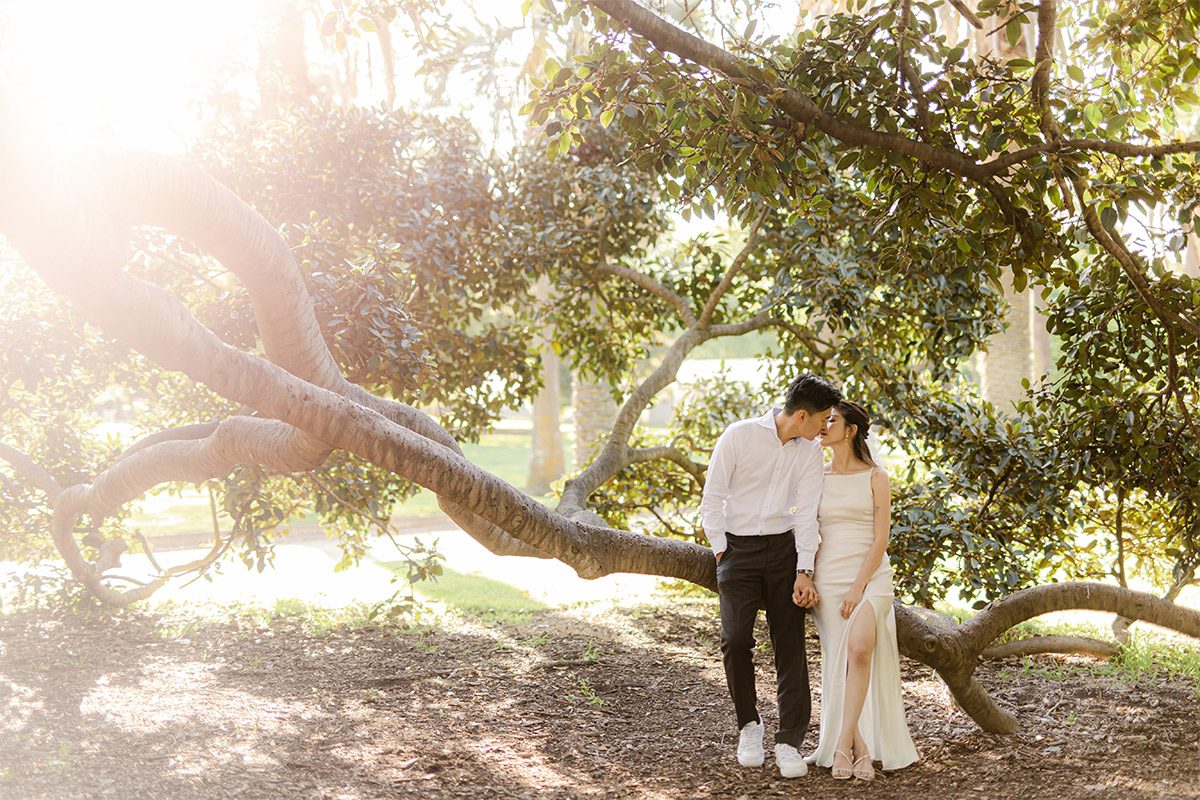
The surrounding Botanic Gardens also offer quieter pockets. The cranbourne lawns and the Oriental-themed sections near the Guilfoyle’s Volcano have wide open green spaces with scattered trees that feel meditative. Walking barefoot through dew-wet grass in a simple white dress produces images that are so gentle they almost hum.
Dandenong Ranges and Ferny Creek
Further out, the Dandenong Ranges deliver a different kind of Japanese feel — more forest, more moss, more rain. The Sherbrooke Forest walk is the standout. Towering tree ferns, moss-covered logs, and a canopy so thick that the light comes through in soft shafts. It looks like the forest from a Miyazaki film — lush, green, and alive. The humidity keeps everything dewy, which means leaves glisten and skin looks fresh and natural without any retouching.
Ferny Creek walking track near Belgrave is another gem. The creek bed is lined with myrtle beeches and the water is shallow and clear. In autumn the fallen leaves turn gold and red, and the whole scene looks like a watercolor painting left out in the rain. Couples wading barefoot through the creek, laughing, caught mid-movement — these frames have that candid, unposed quality that defines the Japanese healing aesthetic.
Urban Spots With a Quiet, Airy Energy
Japanese photography is not only about nature. Some of the most beautiful images in this style come from city streets that happen to be pale and quiet.
Fitzroy and Collingwood’s Tree-Lined Streets
Brunswick Street in Fitzroy has a particular quality in the early morning. The old Victorian terraces, the jacaranda trees (in spring) or plane trees (year-round), and the pale footpaths create a soft, almost pastel palette. The street is empty before 8am. A couple walking slowly, holding hands, shot from a distance with a long lens that compresses the background into a wash of green and cream — it looks like a frame from a quiet Japanese drama.
Wellington Parade in Collingwood offers similar energy but with more industrial texture. The old factories and warehouses along the parade have pale brick walls and large windows that let in soft, even light. Standing in front of one of these windows, backlit, with nothing but a white wall and soft shadow behind you — that minimalism is pure Japanese. Less is more. Empty space is not empty; it is full of feeling.
Melbourne’s Coastal Paths and Piers
The coast gives this style a different dimension — open, airy, and slightly melancholic in the best way. The St Kilda Baths and the palais pier at dawn have a pale, washed-out quality that looks almost monochrome. The concrete structures, the flat water, the pale sky — everything is muted and soft. A couple sitting on the edge of the pier, legs dangling, facing the water, shot in high-key — the image feels like it belongs in a Japanese indie film about young love.
Brighton Beach and the Elwood foreshore offer a similar vibe but more intimate. The bathing boxes, the calm water, the wide sandy beach — all of it photographs in soft pastels when the light is right. Early morning here, when the tide is low and the sand is wet and reflective, creates a mirror effect that doubles the softness. Walking along the waterline, wind in hair, simple linen clothes — this is the visual equivalent of a deep breath.
The Emotional Core: Capturing What Cannot Be Staged
The Japanese healing style is not really about locations or light or even editing. It is about attention. It asks the photographer to pay attention to the things that happen between the planned moments — the in-between breaths, the glances that last half a second too long, the way a hand finds another hand without looking.
The Power of Negative Space
Japanese composition loves empty space. A couple positioned in the bottom third of the frame, with a vast pale sky or a blank wall above them, creates a sense of openness and calm that crowded compositions cannot. Melbourne’s architecture helps here — the wide verandas of Victorian homes, the blank concrete walls of laneways, the open sky above the Yarra — all of it provides natural negative space that makes the couple feel both intimate and free.
Do not fill the frame. Let the image breathe. A small couple against a large, empty background reads as tender and vulnerable — exactly the feeling this style is after.
Candid Moments Over Posed Ones
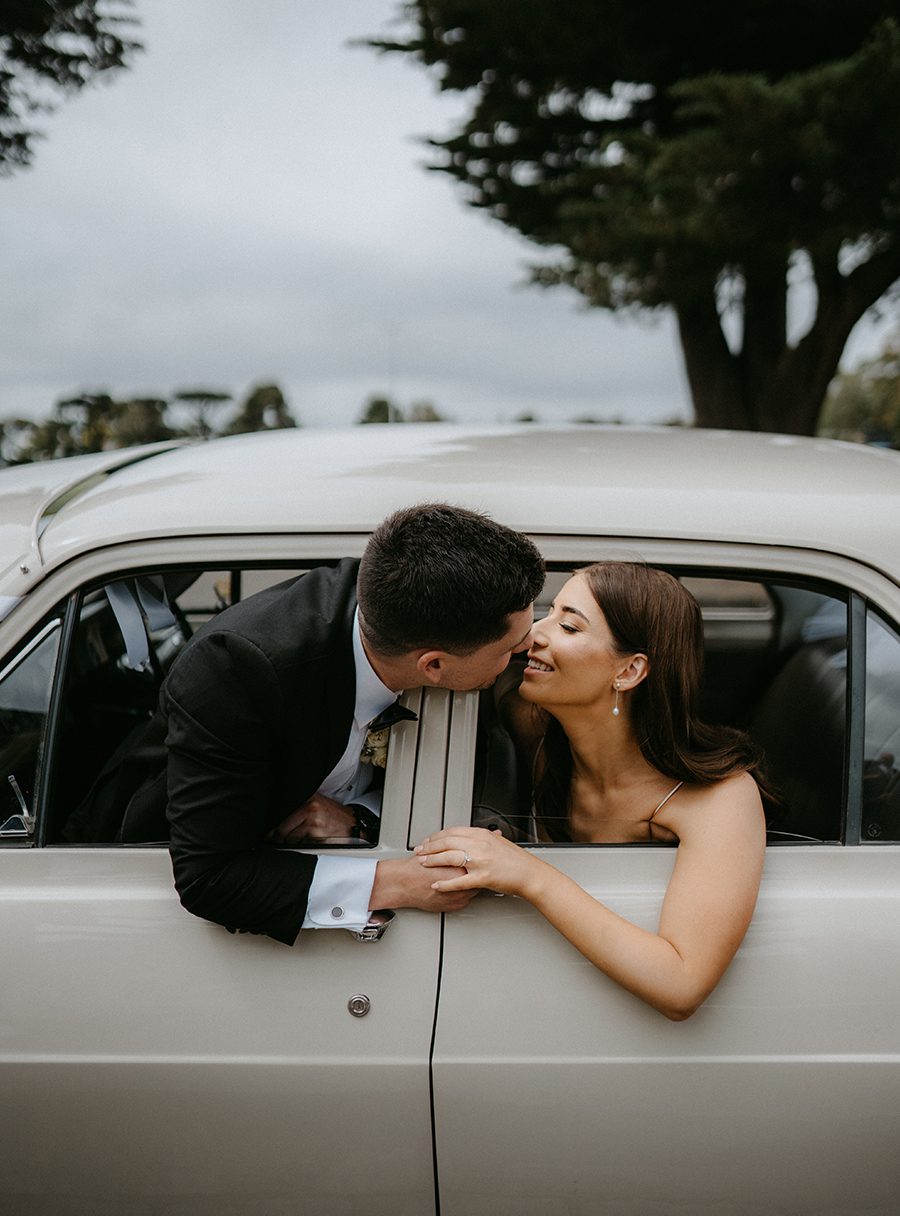
The most healing images are never posed. They happen when the couple forgets the camera is there. Laughing in a car. Eating chips on a park bench. Dancing badly in a kitchen. These unguarded moments carry more emotional weight than any perfect portrait, and they photograph beautifully in this style because the softness of the light and the muted palette make even messy, chaotic moments look gentle.
A good photographer working in this style spends the first hour just walking and talking with the couple — no camera, no direction. By the time the camera comes out, the couple is relaxed and natural, and the images that follow feel like they were stolen rather than taken.
Editing That Feels Like a Soft Memory
The post-processing for this style is subtle but deliberate. The goal is not to make the photo look Japanese — it is to make it feel like a memory of a perfect day. Lift the shadows slightly so nothing is truly dark. Desaturate the greens so they lean toward sage or olive. Warm the highlights just a touch — not gold, not orange, just a whisper of warmth. Add the finest grain possible, just enough to kill the digital sharpness and give the image a tactile, film-like quality.
Skin tones should be pale and even, never tanned or contrasty. The whites should be creamy, not blown out. The blacks should be lifted to dark grey, never true black — true black feels heavy and Western; dark grey feels soft and Eastern.
The overall effect should be an image that makes you exhale when you see it. Not because it is boring — but because it is calm. And in a world that is loud and fast and overstimulated, a calm wedding photograph is the rarest luxury of all.
Melbourne gives you the gardens, the coast, the laneways, the light, and the quiet mornings. All you need is a photographer who understands that the most important thing in any frame is not what you see — it is what you feel when you look away.