What your venue type does to your photographs
Venue lists tell you which places are beautiful. Nobody tells you what each kind of venue does to your light, your timeline and your rain plan — which is the part you cannot change afterwards.
Why the type matters more than the name
Almost every venue article is a list: the twenty-four most beautiful places to marry in Victoria, the ten best Yarra Valley estates. They are useful for discovery and useless for planning, because by the time you are choosing between two venues the decision is usually being made by guest count, catering and price — not by which one photographs better.
The more useful question comes earlier: what kind of place do we want? That decision sets your light, your travel, and how much your day depends on the weather. It is also the one you can still change cheaply.
Below, six types with the same four questions asked of each. The light curve on each card is a rough profile of how usable the daylight is across the day — the shape is what matters, not the numbers. Compare the shapes: a winery peaks late and gently, a function centre is a flat line, a beach spikes at the end.
Six venue types, profiled
Winery & farm
Rain: Mixed- What it gives you
- Long soft afternoon, open space, and room to walk without leaving the site. The most forgiving type for a photographer, and the easiest to keep on schedule.
- What to watch
- Rows run in one direction only — which way they face decides whether you get backlit portraits or flat ones. Ask, and ask on site.
- Timeline
- Generous. Single site, so no travel block, and golden hour is usually a two-minute walk from the reception.
Heritage & mansion
Rain: Strong- What it gives you
- Architecture does half the work. Colonnades, staircases and tall windows give structure that a lawn cannot, and every frame reads as somewhere specific.
- What to watch
- Interiors are darker than they look to the eye. Ask which rooms you may use and whether lighting stands are allowed — some heritage sites say no.
- Timeline
- Tight. Rooms are often booked in sequence and access windows are fixed, so the photography has to fit around the building rather than the light.
Garden & botanical
Rain: Weak- What it gives you
- Open shade everywhere, which is the single most useful thing a venue can offer. Green backgrounds flatter almost every skin tone.
- What to watch
- Dappled light under trees is the trap — bright patches on faces cannot be fixed later. Find the even shade, not the pretty tree.
- Timeline
- Good, provided the ceremony and reception are on the same grounds. Public gardens often need a permit and a fixed window.
Coastal & ocean view
Rain: Weak- What it gives you
- The best sunsets of any venue type, and a horizon that gives every wide frame depth. Late light on water is genuinely hard to beat.
- What to watch
- Wind, and mid-afternoon glare off sand and water. Both are worse than couples expect, and neither shows up on a calm morning site visit.
- Timeline
- Sunset-driven and unforgiving — miss the window and it is gone. Build the day backwards from it rather than hoping.
Urban space & restaurant
Rain: Strong- What it gives you
- Texture and character within a short walk — laneways, brick, glass, reflections. Also the most weather-proof type, because shelter is everywhere.
- What to watch
- Mixed artificial light indoors (warm bulbs against cool windows) is the technical challenge. Also check what is legal to shoot in and what needs a permit.
- Timeline
- Flexible. Short walks rather than drives, and you can step out for ten minutes at almost any point in the evening.
Function centre
Rain: Strong- What it gives you
- Everything in one building, run by people who do this every weekend. Logistically the least likely type to go wrong.
- What to watch
- Often little or no daylight in the reception room. This is the type where the lighting question in your photographer brief genuinely matters.
- Timeline
- Very good on paper — no travel — but the good light is usually outside, so the portrait block still needs to leave the building.
The cross-comparison
The same six types on the four things that actually change your day. Read down a column rather than across a row — it is the trade-offs between types that are informative.
| Best light window | Travel between locations | If it rains | The question to ask | |
|---|---|---|---|---|
| Winery & farm | Long — the whole late afternoon | Usually none | Depends entirely on the barn or pavilion | Which way do the rows face? |
| Heritage & mansion | Even but modest, indoors all day | Often none, but rooms are timed | Excellent — you are already inside | Which rooms may we use, and can lights be set up? |
| Garden & botanical | Broad — open shade from mid-morning | Sometimes, if the reception is elsewhere | Poor without a marquee | Where is the even shade, not the pretty tree? |
| Coastal & ocean view | Narrow and late — the last hour | Often, and parking is the slow part | Poor, and wind matters as much as rain | What is the wind like at 4pm? |
| Urban & restaurant | Consistent, never dramatic | Short walks rather than drives | Excellent — shelter is everywhere | What can we shoot in without a permit? |
| Function centre | Flat — the good light is outside | None | Excellent | Does the reception room have any daylight? |
One pattern is worth pulling out. The types that are strongest in the rain — heritage, urban, function centre — are also the ones with the weakest daylight. That is not a coincidence: shelter and daylight are the same trade-off seen from two sides. Whichever end you pick, our wet-weather guide covers the decision points, and the shelter matrix in it pairs directly with this table.
Five questions to ask on the site visit
Venues are shown at their best hour, usually on a bright morning with the doors open. These five reveal what the tour will not.
- Where is the sun at our ceremony hour, in our month? The single most useful question, and almost nobody asks it. A west-facing lawn is glorious in October and punishing at 4pm in January.
- Where is the open shade near the reception? This is where family photos and half the portraits will happen. If the answer is “the car park”, that is still useful to know now.
- What is the wet-weather plan, and how many does it seat? Backup rooms are almost always smaller than the lawn.
- Are there restrictions on lighting or where we can go? Heritage sites often restrict stands and flash; public gardens often need permits. Better to know before your photographer discovers it on the day.
- What time does the light leave the reception room? Many rooms are lovely at 5pm and cave-like by 7. That transition decides what your speeches look like.
How the venue reads on film
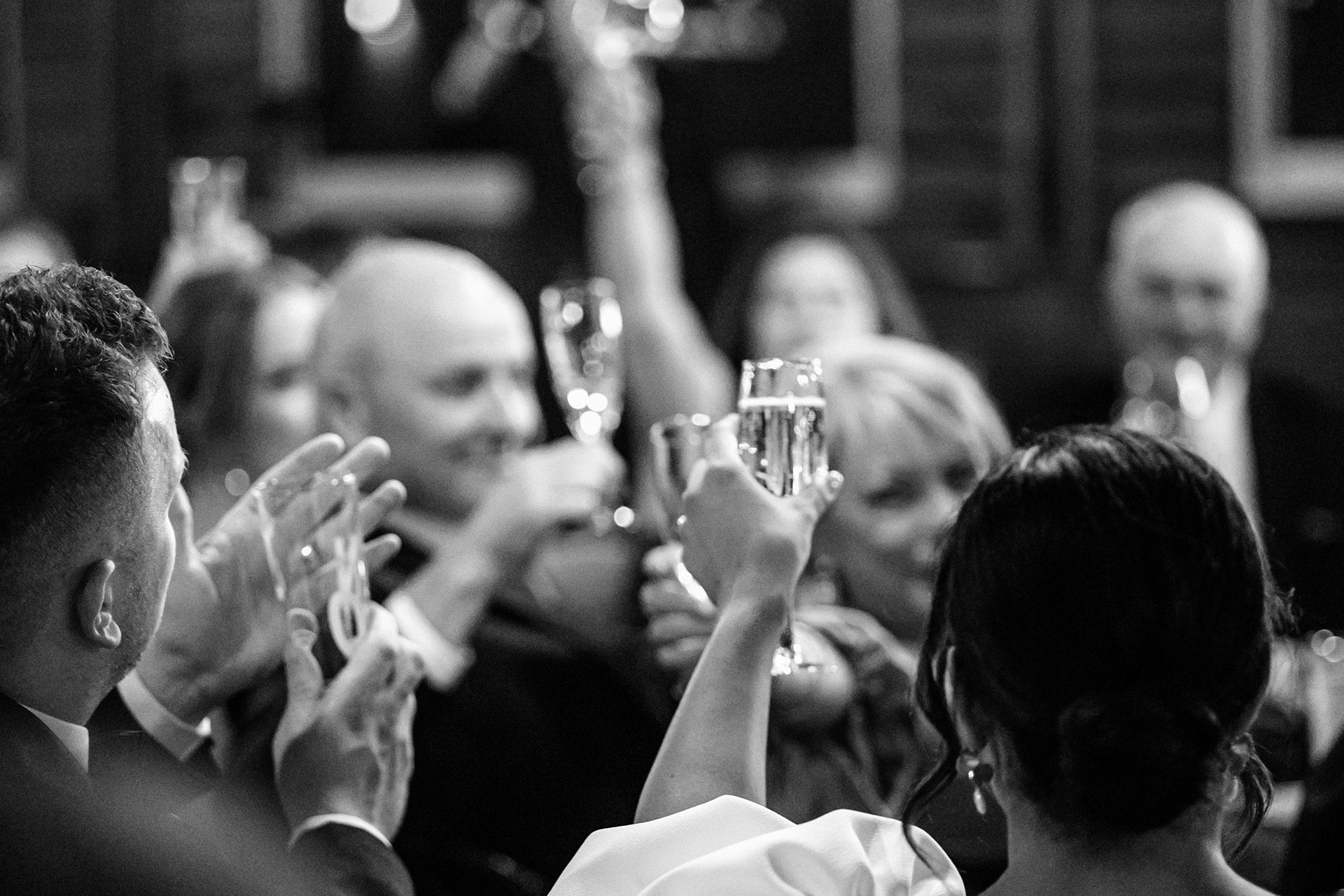
Venue type shows up on film even more than in stills, because a film has to move through the space. A winery gives a cinematographer long walks and wide establishing shots; a heritage interior gives doorways and staircases; a function room gives faces and very little else. None of these is a limitation so much as a grammar.
How a venue reads on film — space, movement and the walk between rooms
If you have narrowed to a type and want to see how it actually looks across a whole wedding rather than in one hero frame, the archives linked from each card above are complete galleries rather than highlights — which, as our vetting guide argues, is the only way to judge a photographer or a venue. Once your date and venue are set, the timeline guide turns the light curve above into an actual run sheet.
Questions couples ask
Does the venue type really change the photographs that much?
It changes two things more than any other single decision: the quality of light you get at the hours you have booked, and how much walking your day involves. A winery gives you soft afternoon light and space to move; a heritage interior gives you atmosphere and dark corners. Neither is better — but they produce visibly different galleries, and knowing which you are choosing is worth ten minutes of thought.
We have already booked. Is this still useful?
Yes, and arguably more so — the point is no longer choosing but adapting. Knowing that your venue type runs dark indoors, or that its ceremony lawn faces west into afternoon sun, changes your timeline and the questions you put to your photographer. Almost every constraint in this guide can be planned around once you know it exists.
Which venue type is easiest to photograph?
Gardens and wineries, because both give you open shade and a long soft afternoon. The hardest are windowless function rooms and mid-summer beaches — one has no daylight at all, the other has too much of it from the wrong direction. Hard is not the same as bad; it just means the lighting plan matters more.
How much does travelling between locations cost us?
Roughly 25 to 40 minutes per move once you account for gathering people, driving, parking and walking. Single-site venues buy that time back, which is the strongest practical argument for them. If you love a venue that needs a separate ceremony location, build the move into the run sheet rather than hoping it will compress.
What is the one thing to check on a site visit?
Where the sun is at your ceremony hour, on a date near your wedding date. Everything else — the room, the view, the trees — is visible on any visit. The direction and angle of the light at 3pm in March is not, and it is the thing that most affects your photographs.
Do we need a venue with a "photo spot"?
No. Venues sell a signature backdrop and it usually appears in five frames out of eight hundred. What matters far more is whether there is open shade near the reception and somewhere sheltered if it rains — the ordinary, useful stuff that no venue puts in its brochure.