The engagement shoot is a rehearsal
Every guide sells it as pretty photographs for a save-the-date. Those are the by-product. The point is one low-stakes hour that tells you how you two actually photograph — while there is still time to do something about it.
The photos are the by-product
Search for engagement shoot advice and you will find excellent, thorough articles about poses, outfits and locations. Sixty ideas, a hundred ideas. They are all answering the same implicit question: how do we get good photographs out of this?
That is the wrong question, or at least the smaller one. You are going to get some good photographs — a competent photographer with two people who like each other and an hour of decent light will always produce something worth keeping. That part is not in doubt and does not need sixty tips.
The thing you cannot get any other way is information. How do the two of you behave in front of a camera? Which of you goes stiff, and for how long? Does this photographer give clear direction or vague encouragement, and do you understand it? On your wedding day the answers to those questions will shape three hundred photographs. On an ordinary Sunday afternoon they cost you ninety minutes to find out.
What the ninety minutes actually contains
Sessions are sold by duration, which makes them sound uniform. They are not — the useful part is heavily back-loaded, and that has a practical consequence for how long you book.
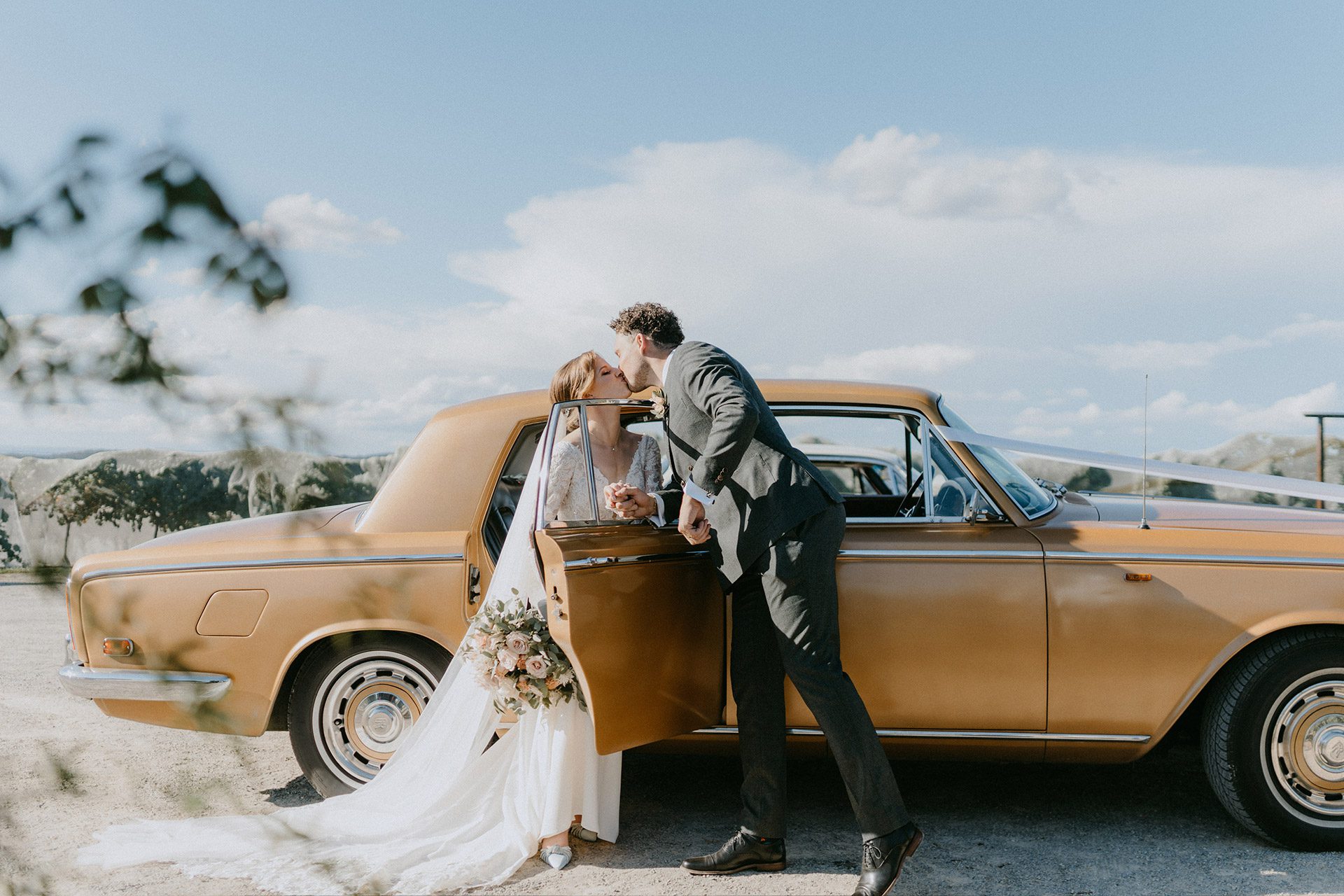
The stiff phase is not a character flaw and it is not avoidable — it happens to models too. What changes is how long it lasts, and it shortens dramatically the second time you do it. That is precisely why the session transfers value to the wedding day: you have already spent your awkward fifteen minutes, months earlier, in a car park in Fitzroy.
Four things you find out
All four are actionable, and all four are cheap to fix in advance and expensive to discover on the day.
| What you learn | What to do about it | |
|---|---|---|
| How long your stiff phase lasts | Some couples relax in five minutes, some need twenty-five | If it is long, schedule couple portraits later in the day rather than straight after the ceremony |
| Which of you needs direction | Almost always one of you wants telling and the other wants leaving alone | Say so to your photographer. It changes how they work with you and takes one sentence |
| Whether their direction makes sense to you | “Walk towards me and talk about dinner” either works for you or does not | If it does not, say so now. A good photographer changes register; a defensive one is a warning |
| What you look like to each other | Most couples have never seen unposed photographs of themselves together | Tells you what to ask for more of on the day — and what to ask for less of |
The third row is the one that matters most and the one nobody frames as a test. It is, quietly, the last easy opportunity to find out that you and your photographer do not communicate well — while changing your mind still costs a deposit rather than a wedding. Our vetting guide covers the questions to ask before you get this far.
Where the photos end up
Worth being honest about the outputs, because the marketing case for engagement shoots over-promises on the photographs and under-sells everything else.
In practice couples use three to five frames for save-the-dates and a website, print one, and never look at the other seventy again. That is not a criticism — it is what these galleries are for, and it is exactly why the two non-photographic outputs are the real return.
Timing, location, clothes
The practical stuff, kept short, because the rest of the internet covers it thoroughly and mostly correctly.
When. Six to nine months before the wedding. Late enough that you look like yourselves on the day, early enough for save-the-dates and for the rehearsal to be worth something. Start ninety minutes before sunset and let the session run into golden hour rather than beginning in it — you will be relaxed by the time the good light arrives.
Where. Somewhere you would go anyway. The best sessions we shoot are in neighbourhoods people actually live in, not landmark locations chosen for the backdrop. A place with meaning gives you something to talk about, and talking is what makes the photographs. One location, not three — moving costs twenty minutes each time and buys variety you will not use.
What to wear. Clothes you have worn before. New shoes and unfamiliar necklines produce a specific kind of self-consciousness that shows in every frame. Coordinate rather than match, avoid tight patterns, and bring one change at most — changing costs you ten to fifteen minutes of the best light for photographs that are rarely better.
When to skip it
It is not compulsory, and there are three situations where the money is better spent elsewhere.
If it cannot be with your wedding photographer. A cheaper session with someone else gets you photographs and none of the rehearsal value. If your budget only stretches to one, put it into wedding-day hours.
If it would be in the last three months. Too late to act on what you learn, and too late for save-the-dates. At that point you are buying a photo session, which is fine — just do not expect it to do the other job.
If you are already comfortable being photographed together. Some couples genuinely are, usually because they have done it before. The rehearsal value is proportional to how unfamiliar it feels.
Everyone else — which is most couples — gets more out of ninety minutes here than out of almost any other pre-wedding hour.
What it looks like
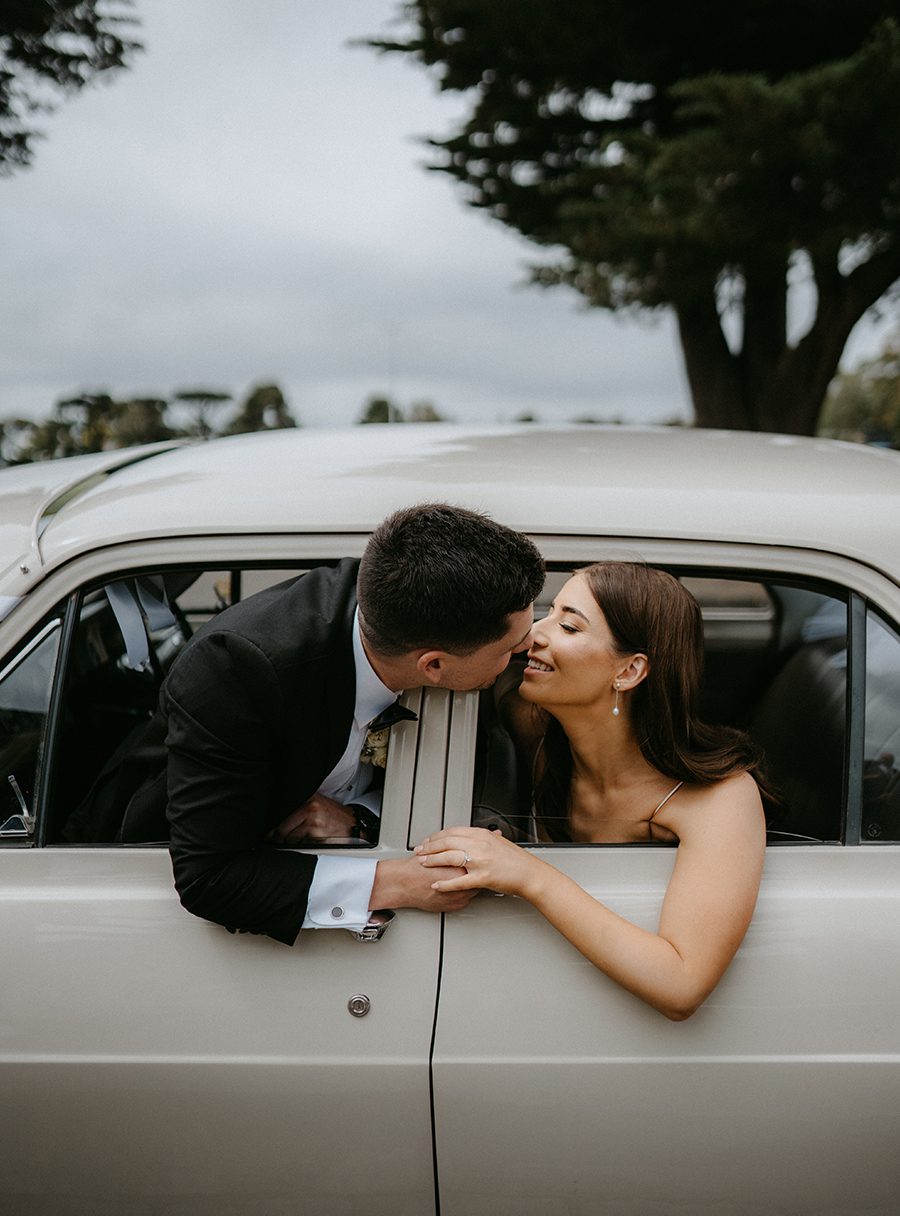
The shift from the stiff phase to the real one is more obvious in motion than in stills. It is the moment people stop watching the camera and start watching each other.
The moment a session stops being posed — what a rehearsal hour is actually for
You can see complete sessions on our engagement portfolio, and if you would like to talk through timing or a location that means something to you, our contact page reaches us directly. If the wedding day itself is still taking shape, the timeline guide is the natural next read.
Questions couples ask
When should we do the engagement shoot?
Six to nine months before the wedding is the useful window. Far enough out that the photographs are ready for save-the-dates, and close enough that what you learn about being photographed is still fresh on the day. Anything under three months and you lose the rehearsal value, because there is no time to act on what you find out.
Do we have to use the same photographer as the wedding?
For the rehearsal value, yes — the entire point is calibrating with the person who will be there on the day. Using a cheaper photographer for the engagement shoot gets you pretty photographs and none of the benefit. If your wedding photographer does not offer one, that is worth asking about before you book.
How long should the session be?
Sixty to ninety minutes is the sweet spot. Under an hour and you finish just as you have relaxed — which is the part you came for. Over two hours and most couples run out of energy well before the photographer runs out of light.
We are both awkward in front of a camera. Is this going to be worse?
This is the strongest reason to do one. Every couple is awkward for the first fifteen minutes; that is not a personality trait, it is just unfamiliarity. Getting those fifteen minutes out of the way months in advance means your wedding day starts from minute sixteen rather than minute one.
Should we bring a change of outfit?
One change is useful, two is a scheduling problem. Changing costs you ten to fifteen minutes of the light, and the second outfit rarely produces better photographs than the first — by then you are relaxed, which matters more than the clothes.
What if we hate the photos?
Then the session has done its job, months before it would have mattered. You now know something concrete — that a location, a style of direction or a photographer is not right for you — while there is still time to change it. That is a good outcome, not a wasted afternoon.