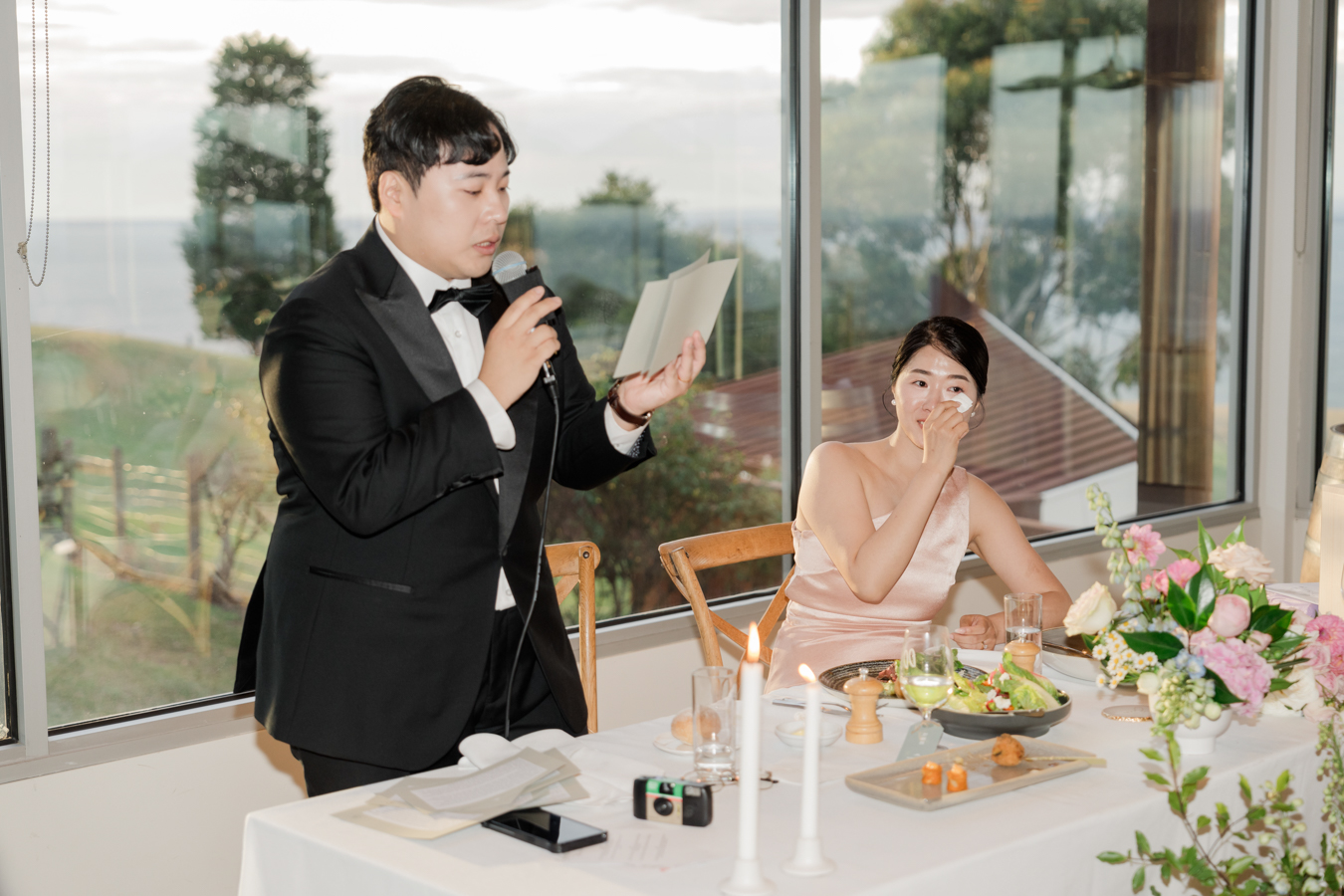
Melbourne wedding photography with a dark tone and high-end texture style
Melbourne wedding photography with a dark tone and high-end texture style
Melbourne Wedding Photography: The Dark and Moody Luxe Edit
There is a kind of wedding photography that does not need sunshine. It thrives in shadows. It finds beauty in a single shaft of light cutting through a dim room, in the reflection of a streetlamp on wet asphalt, in the deep blue of a sky that refuses to go completely black. This is the dark, moody, high-end aesthetic — the look that says you are not trying to impress anyone, but somehow you are impossible to look away from. Melbourne, with its moody weather, its bluestone alleyways, and its love of dramatic contrast, is one of the few cities on earth where this style does not feel forced. It feels inevitable.
Why Dark and Moody Works in Melbourne Specifically
Most wedding photography trends come from California or Europe — places with guaranteed sun and pastel palettes. Melbourne does not do guaranteed sun. It does overcast skies, sudden rain, and light that changes every eleven minutes. And that unpredictability is exactly what dark photography needs.
When the sky goes grey, the world loses its flatness. Shadows deepen. Colors saturate. The bluestone footpaths turn almost blue. The brick buildings go warm and rich. Everything gains dimension because the light is not blasting everything equally — it is selective, moody, and full of drama. That is the canvas a dark-style photographer works on.
The city’s architecture helps enormously. Melbourne is full of Victorian and Edwardian buildings with deep verandas, dark wood interiors, stained glass windows, and heavy ironwork. These spaces were not designed to be bright and airy — they were designed to be atmospheric. A ballroom with dark paneling and crystal chandeliers throws light in every direction, creating pools of gold on dark floors. That contrast — light against dark — is the entire foundation of this aesthetic.
And then there is the people. Melburnians have a certain look — understated, slightly melancholic, effortlessly cool. They do not smile for the camera the way people in other cities do. They look away. They drink their coffee. They walk fast. That natural reserve translates perfectly into dark wedding photography, where the best images are the ones where the couple looks like they are in their own private world, untouched by the chaos around them.
The Locations That Were Built for Shadow
You do not need a studio. You do not need black backdrops. Melbourne has real places that are genuinely dark, genuinely atmospheric, and genuinely beautiful without any help.
Old Churches and Heritage Interiors
Churches are the obvious choice, but most people shoot them wrong — they blast them with flash and turn every cathedral into a bright, flat wedding venue. The trick is to shoot them with available light only. Let the stained glass do the work.
St Paul’s Cathedral on Flinders Street has interiors that go dark fast — the stone absorbs light, the ceiling disappears into shadow, and the only color comes from the windows. Standing in the nave with nothing but a sliver of colored light falling across your face creates a portrait that looks like a Caravaggio painting. The darkness around you is not empty — it is full of texture, of history, of centuries of accumulated silence.
St James Old Cathedral on King Street is even better for this style. It is smaller, darker, and more intimate. The wooden pews, the low ceiling, the candlelight from the side chapels — it all feels like a secret room. A couple standing near the altar with a single candle between them, lit only by the warm flicker, creates an image so moody it could hang in a gallery. The shadows swallow everything except their faces, and that focus on just the two of them in the dark is deeply romantic in a way that bright photos never achieve.
All Saints Church in East Melbourne has a different kind of darkness — more Gothic, more dramatic, with pointed arches that create natural frames of shadow. The light comes through narrow windows in thin beams that cut across the stone floor. Walking through one of those beams, caught mid-stride, with the rest of the church in deep shadow behind you — that single moment of light in a sea of dark is the visual definition of this style.
Laneways and Arcades After Dark
Melbourne’s laneways transform completely when the sun goes down. The graffiti that looks colorful at noon becomes mysterious and layered under streetlights. The narrow passages get darker, the walls press in closer, and the only light comes from the ends of the lanes or from neon signs bleeding through doorways.
Hosier Lane at night is not the tourist trap it is by day. After 10pm, the crowds thin out, the streetlights cast long orange pools on the bluestone, and the graffiti glows in ways it never does in sunlight. A couple walking down the center of the lane, lit only by the warm streetlight from above, looks like they are in a film noir. The shadows under their eyes, the contrast between the light on their faces and the dark behind them — it is cinematic without a single artificial light.
The Block Arcade and Royal Arcade in the CBD offer a different kind of dark luxury. These Victorian shopping arcades have glass ceilings that let in the last of the daylight, marble floors that reflect what little light there is, and iron railings that create geometric shadow patterns. The light here is fading — blue hour, that window between day and night — and it casts everything in deep indigo. A couple standing under the glass roof as the sky outside goes dark, with the arcade’s warm gas lamps just starting to glow, creates an image that feels like the last frame of a very good movie.
Industrial Spaces and Warehouses
The darker the better. Abbotsford Convent, Collingwood warehouses, Footscray factories — these spaces have high ceilings that disappear into blackness, concrete floors that absorb light, and massive windows that let in just enough to create silhouette and shape.
The interior of the Old Melbourne Gaol is extreme, but it works. The stone cells, the iron doors, the narrow corridors — it is genuinely dark and genuinely eerie. A couple standing in a cell doorway, lit by a single bare bulb swinging from the ceiling, creates an image that is haunting and beautiful at the same time. It is not for everyone. But for couples who want their wedding photos to feel like something out of a gothic novel, it is unmatched.
More accessible are the warehouses along the Yarra in Richmond and South Melbourne. The old brick buildings have huge windows that face west, which means they catch the last light of the day in long, warm rectangles that stretch across the floor. As the sun drops, those rectangles shrink and the room gets darker. Shooting in that transition — when half the room is gold and half is shadow — gives you images that feel like they are between two worlds.
The Art of Seeing in Low Light
Dark photography is not about making things dark. It is about seeing where the light is and building everything around its absence. That is a different skill set entirely, and it changes how you approach every shoot.
Working With Available Light Only
No flash. No reflectors. No LED panels. Just what is already there — a window, a lamp, a streetlight, the last glow of the sky. This forces you to move the couple toward the light, to position them so the shadow falls where you want it, to wait for the cloud to move so a beam of sun hits just right. It is slower than traditional wedding photography. It is more patient. And the results are infinitely more interesting because every frame is shaped by the environment rather than by equipment.
The camera does the heavy lifting here. Modern mirrorless bodies handle low light astonishingly well — you can shoot at ISO 6400 and still get clean images with beautiful, natural grain. That grain is not a flaw. In dark photography, grain is texture. It is atmosphere. It is the visual equivalent of velvet.
Silhouettes and Shapes Over Detail
When the light is low, stop trying to see faces. Start seeing shapes. The curve of a jaw in silhouette. The outline of a couple embracing against a bright window. The shape of a hand reaching for another hand in near-darkness. These abstract, graphic images often carry more emotion than a sharp portrait because they ask the viewer to fill in the blanks — to imagine the expression, the feeling, the story.
A silhouette of a bride and groom standing in a church doorway, the light behind them blowing out the window into pure white, their figures completely black — that image is iconic. It is simple. It is graphic. And it says more about love than a thousand detailed portraits ever could.
The Window Light Trick
The single most beautiful light source for dark wedding photography is a large window on an overcast day. The light that comes through is soft, directional, and falls off fast — meaning one side of the face is lit and the other side falls into deep shadow. That half-light, half-dark look is called chiaroscuro, and it has been used by painters from Rembrandt to Vermeer to create the most emotional portraits in history.
In Melbourne, almost every old building has these windows. Find one. Place the couple next to it. Let the light fall on one side of their face. Let the other side disappear. Do not fill the shadow. Do not add light. Let the darkness stay. That contrast is where the emotion lives — in the tension between what you can see and what you cannot.
Wardrobe and Styling for the Dark Edit
Bright white dresses do not work here. Pastels do not work. Neon does not work. The dark aesthetic demands rich, deep, saturated colors — or total black.
Deep Colors That Absorb Light
Burgundy, navy, forest green, deep plum, charcoal — these colors disappear into shadow and then suddenly catch light in a way that white never does. A burgundy velvet dress in a dark church looks like liquid wine. A navy suit in a dimly lit warehouse looks like midnight. The fabric matters too — velvet, silk, heavy crepe — materials that have their own light and shadow built into the texture.
Black is the ultimate dark color, and a black wedding dress shot in a black room with a single light source is one of the most striking images you can make. The dress disappears into the background and only the face and hands emerge — floating in darkness. It is dramatic, it is modern, and it is not for the faint of heart. But when it works, it works like nothing else.
Minimal Accessories, Maximum Impact
In bright photography, you can get away with big earrings, chunky necklaces, elaborate headpieces. In dark photography, everything competes with the shadow. Keep it simple. A single ring catching light. A small earring that glints when the head turns. A veil that catches the edge of a light beam and turns translucent. Less is more — always — but in the dark, it is not a suggestion. It is a rule.
The Edit: Deep Shadows, Warm Highlights
The post-processing for dark wedding photography is where the style truly comes together. It is not about making the photo darker — it is about controlling where the dark goes and where the light stays.
Lift the blacks slightly so the deepest shadows are dark grey, not pure black. Pure black looks digital and flat. Dark grey looks like film. Push the contrast so the midtones separate from the shadows — this gives the image depth and makes it feel three-dimensional.
Desaturate the greens and blues. Dark photography lives in warm tones — amber, gold, deep red, brown. Cool colors recede and feel distant. Warm colors come forward and feel intimate. Shift the white balance slightly toward warm, even if the light was cool. That warmth unifies everything and makes the image feel like a memory rather than a photograph.
Add grain. Not a lot — just enough to break up the digital smoothness and give the image a tactile, analog quality. Film grain in a dark photo looks like atmosphere. It looks like the air itself has texture.
And finally, vignette. Heavy vignette. Push the corners to black so the eye is forced to the center of the frame where the couple is lit. That tunnel effect draws the viewer in and creates a sense of intimacy — like you are peering into a private moment that was not meant for you.
The Emotional Core: Intimacy in the Dark
Dark wedding photography is not about sadness. It is not about goth or drama or trying to be edgy. It is about intimacy. When everything around you is dark, the only thing that matters is the person next to you. The light falls on their face and nowhere else. The world disappears. It is just the two of you in a pool of warmth surrounded by shadow.
That feeling — of being alone together, of the world falling away, of love existing in a small bright space inside a vast dark one — is what makes this style so powerful. It is not photogenic because it is dark. It is photogenic because it is honest. And honesty, in a world of overlit, over-filtered, over-shared images, is the rarest thing a photograph can offer.
Melbourne gives you the churches, the laneways, the warehouses, the grey skies, the bluestone shadows, and the moody light that makes everything look like a painting. All you need is the courage to let the dark in — to stop fighting the shadow and start using it. Because in the dark, every point of light becomes a story. And your wedding day is full of them — you just have to be willing to see them.