Safety guarantee measures for outdoor wedding photography in Melbourne
Safety guarantee measures for outdoor wedding photography in Melbourne
Essential Safety Measures for Melbourne Outdoor Wedding Photography
Outdoor wedding photography in Melbourne offers stunning natural backdrops, from coastal vistas to urban landscapes. However, ensuring safety for couples and photography teams requires meticulous planning. Below are actionable strategies to mitigate risks and create memorable experiences.

Environmental Risk Assessment and Site Selection
Choosing a safe location is the foundation of any outdoor shoot. Melbourne’s diverse terrain—including beaches, forests, and cityscapes—demands tailored safety checks.
Terrain Stability: Avoid uneven surfaces, cliff edges, or wetlands, especially after rainfall. For example, shooting near the Yarra River requires assessing soil moisture to prevent slips. Similarly, coastal locations like St Kilda Beach demand scrutiny of tide schedules to avoid being stranded on rocky outcrops.
Wildlife and Vegetation Hazards: Melbourne’s parks and bushlands may harbor venomous snakes, spiders, or stinging plants. Teams should maintain a 5-meter distance from dense foliage and instruct couples to avoid sitting on unverified ground. In areas like the Dandenong Ranges, photographers often carry snake repellent and first-aid kits containing antivenom.
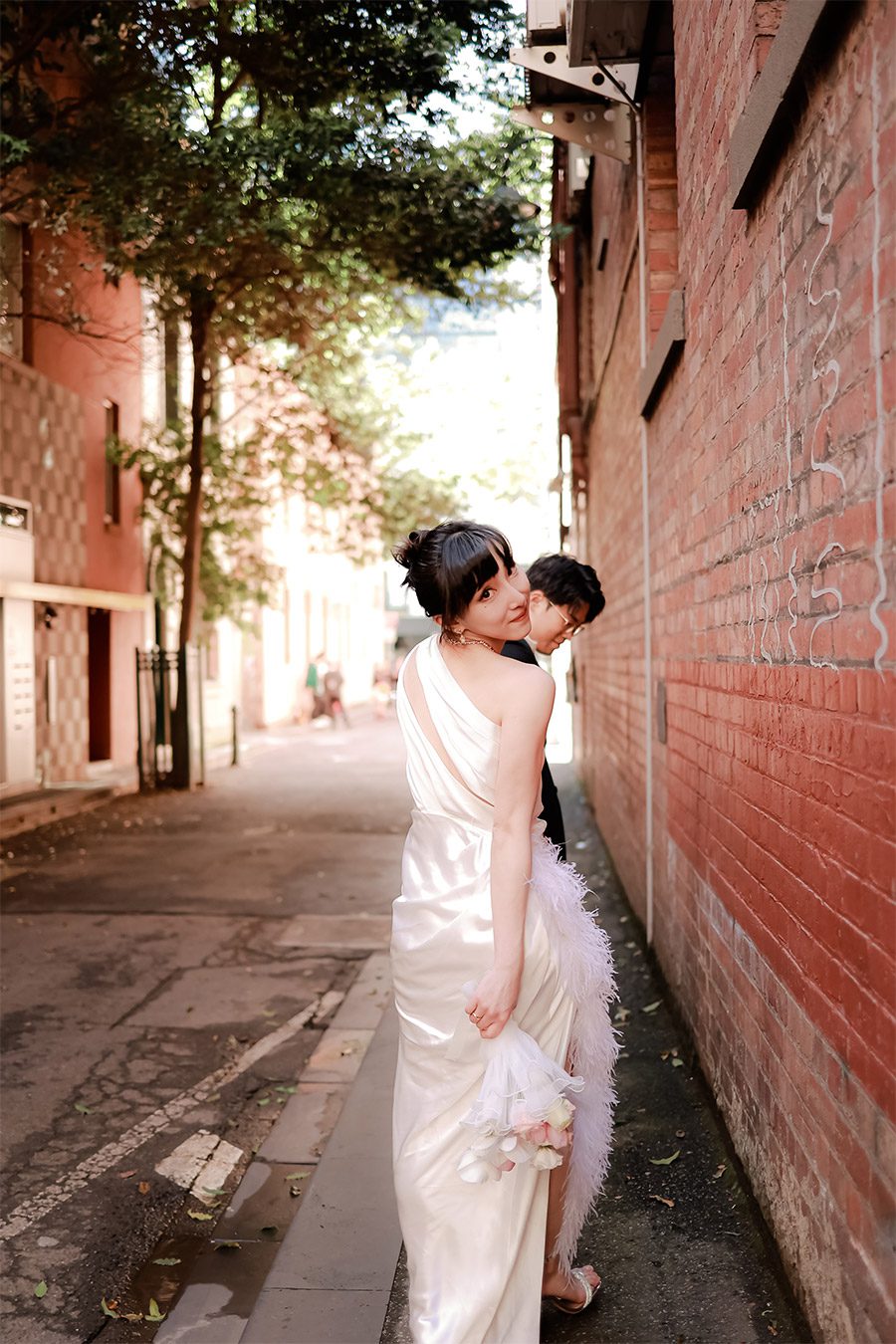
Traffic and Urban Dangers: City shoots near Federation Square or Hosier Lane require monitoring pedestrian and vehicle flow. Teams should position couples away from curbs, use traffic cones to mark boundaries, and assign assistants to guide crowds.
Weather Preparedness and Contingency Planning
Melbourne’s notorious “four seasons in one day” climate demands flexible scheduling.
Real-Time Weather Monitoring: Prior to the shoot, teams should check the Bureau of Meteorology’s updates for sudden wind shifts, thunderstorms, or heatwaves. For instance, a planned sunset shoot at Brighton Beach could be rerouted to a sheltered studio if gale-force winds are forecast.
Heat and Sun Protection: During summer, couples risk dehydration or sunburn during prolonged outdoor sessions. Photographers often provide portable shade tents, UV-protection sprays, and scheduled breaks in air-conditioned vehicles. Case studies show that teams shooting in Royal Botanic Gardens Victoria reduce midday exposure by 50%, opting for early morning or late afternoon light.
Cold Weather Adaptations: Winter shoots in locations like Mount Macedon require couples to wear thermal layers beneath wedding attire. Photographers may use portable heaters and prioritize 15-minute intervals between shots to prevent hypothermia.
Emergency Protocols and Equipment Readiness
A proactive approach to crises ensures swift responses.
First-Aid Kits and Training: Every team member should be certified in basic first aid, with kits stocked for cuts, insect bites, and allergic reactions. In remote areas like the Mornington Peninsula, kits often include satellite communicators and emergency blankets.
Communication Systems: Poor mobile reception in places like the Great Ocean Road necessitates two-way radios or satellite phones. Teams designate a “safety officer” to monitor group movements and relay distress signals.
Evacuation Routes: Before shooting in national parks like Grampians, teams map escape paths to the nearest medical facility. For example, a 2024 incident in the You Yangs required a couple to be airlifted after a fall, underscoring the need for pre-planned extraction strategies.
Clothing and Gear Safety Standards
Apparel and equipment choices directly impact safety.
Footwear: High heels are discouraged on uneven terrain like the Melbourne Docklands’ cobblestones. Couples often opt for low-heeled shoes or bare feet (after ground checks for glass or debris). Photographers recommend bringing spare footwear for sudden weather changes.
Dress Mobility: Heavy gowns with long trains are risky in windy areas like Port Phillip Bay. Teams suggest lightweight fabrics or tucking trains during movement-heavy shots. A 2023 survey found that 78% of Melbourne photographers advise against corseted dresses for hikes in the Dandenongs.
Equipment Stability: Tripods and lighting rigs must be secured on soft ground using sandbags or weighted bases. In windy conditions, teams anchor gear to vehicles or permanent structures. Drones, if used, require CASA compliance and no-fly zone awareness near airports.
Legal Compliance and Insurance
Adhering to regulations protects all parties.
Public Liability Insurance: Teams must carry coverage for accidents on public or private land. For example, shooting in Federation Square requires permits from Melbourne City Council, with insurance certificates submitted beforehand.
Drone and Traffic Laws: Aerial photography near the Melbourne CBD demands CASA certification and adherence to airspace restrictions. Similarly, roadside shoots require compliance with VicRoads guidelines, including high-visibility vests for teams.
Client Waivers: Couples should sign liability waivers acknowledging risks like insect bites or minor injuries. Transparent communication about safety measures builds trust and reduces disputes.
By integrating these measures, Melbourne’s wedding photographers can balance creativity with safety, ensuring couples cherish their special day without unnecessary risks.